

News Center
A modern veterinary drug GMP pharmaceutical enterprise relying on high technology, integrating scientific research, development, production, sales and service
How to raise geese in winter?
Release time:
2022-01-07
How to raise geese in winter?
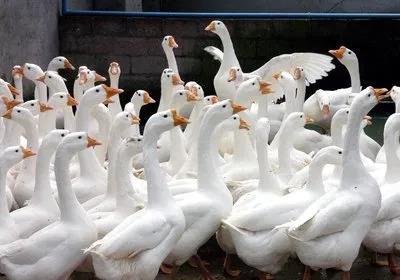
Freezing tolerance of 1. geese
1. Geese can withstand temperatures of about minus 20 ℃. Generally, geese can be bred outdoors for a long time. Special management is not required in winter in the southern region. In winter in the northern region, geese can be led to sheds for breeding and can be insulated by light irradiation. This can also promote the growth of geese and reduce the occurrence of diseases.
2. In winter, goose houses and feeding utensils should be disinfected regularly, because they are more likely to be infected with goose plague in winter. After geese are introduced, they should be vaccinated in time, and residual food and feces should be cleaned regularly during feeding.
3, and the feed to keep fresh, do not feed pesticide contaminated grass, vegetables, etc. In order to increase palatability, it is better to feed the straw of crops after ammoniation treatment.
4. Goose is a herbivorous poultry, and its feed is mainly plant-based feed. Its foraging activity is relatively strong, can forage a large number of natural plant feed, can consume about 2 kilograms of grass per day. In the breeding time can be used to combine the way of feed and forage, and then add appropriate grazing, which can promote the growth and development of geese.
Feeding and Management of 2. Gosling
1. When gosling starts to eat, it can be fed with water first, then green vegetables or pasture, radish leaves mixed with rice and other foods. At the age of 5-10 days, it is fed 3-4 times a day and 2 times at night. Rice accounts for 20%-30% and green fodder accounts for 70%-80%.
2. The gosling has no disease resistance. The defense against some diseases mainly depends on the injection of vaccines, especially the artificially hatched goslings. Vaccines should be selected for injection according to the more common local diseases. The feed is added with Qizhen Zengfree granules to improve the immunity and resistance of geese.
3, gosling fluff is very rare, its own temperature balance system is relatively poor, it is easy to be affected by external temperature, temperature fluctuations may cause big problems, so to do a good job of insulation measures.
4, but also to maintain hygiene and cleanliness, feeding feed, feces, etc. these are likely to become the source of bacteria, coupled with the gosling itself to carry the bacteria, gosling disease probability is relatively large.
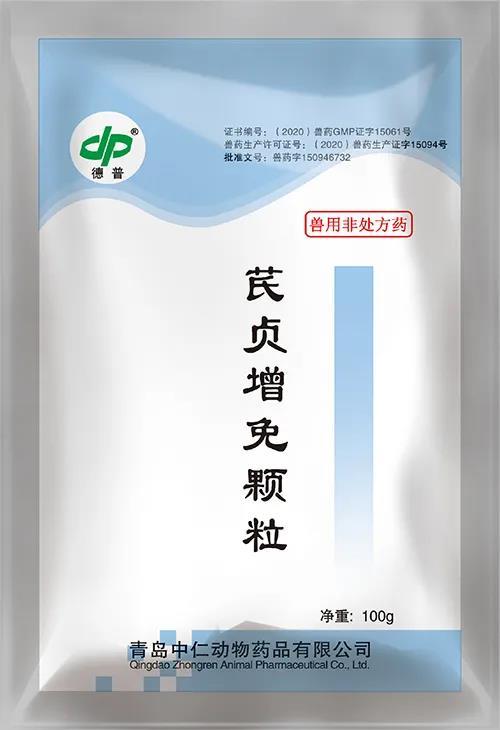
veterinary drug name]
Common name: Qizhen Zengfree Granules
main ingredient]Astragalus, Epimedium, Ligustrum lucidum.
character]This product is yellow-brown particles; sweet taste.
[function]]Nourishing the liver and kidney, Qi solid table.
attending]Chicken immunity is low.
Usage and dosage]Prevention: 100g of this product is mixed with 250kg ~ 300kg and 500kg ~ 600kg of water for 3~5 days.
Treatment: 100g of this product is mixed with 150kg ~ 250kg and 300kg ~ 500kg of water for 4~5 days.
adverse reaction]According to the prescribed dose of use, no adverse reactions.
3. winter goose matters needing attention
1. The choice of gosling
In winter, the choice of geese is very important and cannot be chosen casually. First of all, we should choose healthy and strong geese that cannot be sickly. Sickly geese are not easy to survive in winter. To judge whether a goose is healthy, just grab the goose's neck. If the goose's feet can retract quickly after catching, then it is healthy. Secondly, it is necessary to resist the cold winter. You have to grow fast enough to sell earlier and get a head start. Be careful not to choose a goose with a large belly or a crooked head.
2, pay attention to the three degrees of goose growth environment
Goose growth environment should pay attention to the three degrees are: temperature, humidity and density. Gosling, like human beings, is very weak when it is born and has high requirements for the environment. The initial temperature is required to be about 30 degrees, and then the temperature can be appropriately reduced as the gosling grows. The humidity should also be appropriate. If the humidity in the shed is high, it can be ventilated (at high temperature) to remove moisture. The density of geese cannot be too large (too many geese cannot be raised per unit area). If the density of geese is too large, the living space of geese will be too narrow, cause the problem of insufficient food.
3, light.
In winter, the problem of insufficient light is often found in raising geese. The consequence is that the growth rate of geese decreases and they are easy to get sick. In this case, artificial supplementary light is very important. Temperature sensitive light can be applied in the shed to provide sufficient light spontaneously. This is conducive to the growth and development of goslings and improves the resistance of goslings. In the winter with short days and long days, if geese want to absorb enough light, they can't ignore the role of artificial light. Goose farmers should always be vigilant and don't let themselves ignore this matter.
More news
Contact Us
Administrative service telephone:0532-85212368
Sales Advisory Phone:0086-532-85212381
E-mail:zhongrenyaoye@126.com
Address: No.6 Road, Jiaoxi Industrial Park, Jiaozhou City, Qingdao, Shandong Province

Qingdao Zhongren Animal Medicine Co., Ltd
Zhongren Aquatic Products