

News Center
A modern veterinary drug GMP pharmaceutical enterprise relying on high technology, integrating scientific research, development, production, sales and service
[Caution] Morbid identification of shrimp gills
Release time:
2021-08-12
[Caution] Morbid identification of shrimp gills
Gill involved in the shrimp body respiration, excretion and other physiological activities, plays a very important role in the body metabolism, gill function damage, will inevitably make the disease worse, and even death, which is also the cause of shrimp gill disease greater harm. By observing the lesions of shrimp gills, especially the color of the gills, the incidence and etiology of shrimp can be judged in time. The color of common gill lesions is yellow and black.

First, bacterial infection: after the shrimp is sick, feeding is reduced or stopped, often without rules in the pool swimming slowly, sometimes head up in the water spin, easily frightened and jump out of the water. When changing water, it is often washed to the bottom of the sewage outlet due to lack of body. The severely affected person lost his balance and died on his side at the bottom of the pool. The pathogen of the disease is Vibrio, among which Vibrio alginolyticus, Vibrio parahaemolyticus and Vibrio anguillarum are the most common.
In the early stage of the disease, the shrimp gills were pale yellow. With the development of the disease, the gill filaments are more enlarged, loose, and from yellow to yellowish brown, forming plaques; gill tissue becomes brittle, even erosion; body color turns dark, gill area shell inside yellow. The second touch whip becomes red and easy to break, there are black ulcers or black spots on the carapace, the muscles are white and turbid, the swimming feet of some prawns become red, and the blood clotting time is delayed. Microscopic examination showed that the end of the gill filament was irregular swelling, and the gill tissue appeared vesicular degeneration. There were rod-shaped bacterial activities in the gill filament and hemolymph.
Prevention and control plan: for yellow gill caused by vibrio, use arc standing net to inhibit vibrio; shrimp pond thoroughly disinfect, use strong fungus gram for water disinfection, and use weideli for bottom disinfection.
Second, ciliate infection: disease shrimp activity sluggish, appetite weakened. The operculum is slightly everted, the gills are enlarged, and many villous light yellow objects are attached to the gill filaments. If there are other debris, they are often yellowish brown or black. Under the microscope, it can be seen that the attachment is a large number of dense and mobile ciliates. Ciliates generally do not invade the shrimp body tissue, gills and other tissues, including blood have no obvious pathological changes, also did not find bacteria or other organisms. The ciliates found in the gills of diseased shrimps are mainly condyles, monocondyles, cladysids and bell worms.
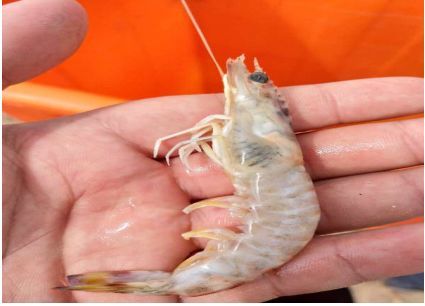
Control program: the use of cilio net to kill or inhibit the growth of ciliates, and make the Weideli completely change the bottom.
Third, the bottom of the pool is poor. With the increasing amount of bait feeding, the residual bait dung at the bottom of the pool increases, the bottom of the water body deteriorates, and the black odor on the black bottom is easy to cause the black gills of shrimp.
Prevention and control plan: use weideli to disinfect and change the bottom; In high temperature season, the whole pool of weideli is regularly sprinkled to purify water quality and improve the blackening and stinking of the bottom of the pool.

Fourth, the poor water quality environment, the bottom of the pool residual bait decay after decomposition to produce ammonia, nitrite, hydrogen sulfide and other substances, so that the shrimp chronic poisoning caused by black gill disease.
Prevention and control plan: use stress detoxification CE to detoxify and supplement vitamins; Use Zhonen Gold Iodine Double Yellow Essence for disinfection; Cooperate with the bottom to change the bottom, and supplement some EM gold dew to improve the water environment.
More news
Contact Us
Administrative service telephone:0532-85212368
Sales Advisory Phone:0086-532-85212381
E-mail:zhongrenyaoye@126.com
Address: No.6 Road, Jiaoxi Industrial Park, Jiaozhou City, Qingdao, Shandong Province

Qingdao Zhongren Animal Medicine Co., Ltd
Zhongren Aquatic Products