

News Center
A modern veterinary drug GMP pharmaceutical enterprise relying on high technology, integrating scientific research, development, production, sales and service
Identification and Prevention of Porcine Clostridium welchens Enteritis
Release time:
2020-11-06

pig clostridium welchii comprehensive prevention and treatment of enteritis:
Porcine Clostridium welchens enteritis is also called porcine infectious necrotizing enteritis, commonly known as piglet red dysentery. The disease is an infectious disease caused by Porcine Clostridium welchens. Pigs of all ages can develop the disease all the year round, especially in late autumn and early winter. Piglets born to one week old are most likely to be infected with the disease. With the increase of age, the incidence rate of pigs decreases. Clostridium welchens enteritis is not a common disease, but it is a sudden onset, short onset time, difficult to treat after symptoms, and high mortality. It is an important disease that seriously harms the pig industry and should be paid attention to by veterinary drug technicians and farmers.
Porcine Clostridium welchens enteritis causes:
Clostridium welchens is a normal group of bacteria in the intestinal tract of humans and animals. It is a typical conditional pathogen. Under some specific conditions, it may cause pigs to suffer from Clostridium welchens enteritis. For example, the pigs in the pig house are too dense, the ventilation conditions in the pig house are not good, the pig house is dirty, the feed, environment and climate change, the pig house is damp and dark, and the pigs fight. The population of Clostridium welchens enteritis is mainly piglets. Late autumn and early winter are the seasons with high incidence. Attention should be paid to protection.
swine clostridium welchens enteritis symptoms diagnosis:
Piglets born 1~3 days are most prone to disease, piglets over 7 days have less disease, piglets often have the whole litter disease, with a mortality rate of 20% ~ 70%, breeding pigs and fattening pigs are mostly between 90 and 180 days old, which is scattered disease. Clinical symptoms: the body temperature of pigs suffering from Clostridium welchii enteritis rises to about 40 ℃, there is no spirit, loss of appetite, difficulty breathing, obvious abdominal expansion, ear tip, nose, lips, hoof and other parts appear blue and purple. Pull dark green or brown feces, sometimes bloody stool, there is a special foul smell, piglets mainly pull red dilute feces, dehydration and emaciation, some pigs vomiting symptoms. If infected with E. coli at the same time, pull yellow-red, yellow, gray dung. There is also sudden death without any symptoms. Clostridium welchii enteritis sick dead pigs abdominal distention, abdominal wall diffuse congestion, a small number of pigs anal eversion. Anatomical symptoms: the main features are intestinal bleeding, empty bowel segment, jejunal mucosa swelling, mesenteric lymph node enlargement or hemorrhage, inflammation; in addition, the chest and abdominal cavity yellow liquid, the stomach is full of contents and gas, gastric mucosa shedding, liver, splenomegaly, pulmonary congestion, bleeding, hemoptysis cases.
how to porcine clostridium welchens enteritis diagnosis differential:
Clostridium welchii enteritis is mainly within seven days of the onset of piglets, the main symptoms are fever and pull red loose stool, short course of disease. Clostridium welchii enteritis is similar to colibacillosis in symptoms, but anatomical examination revealed significant hemorrhagic and jejunal segments of the clostridium welchii intestine. Clostridium welchii enteritis and anthracnose are acute onset, abdominal distention. However, anthrax is often septic and can be distinguished by bacteriological examination. Clostridium welchii enteritis and Clostridium botulinum poisoning are sudden onset, acute death. But the abdomen of Clostridium welchii is obviously distended. Clostridium welchii often Escherichia coli, Staphylococcus aureus, Klebsiella pneumoniae, Pasteurella, Salmonella and other bacteria mixed infection, also have a separate infection. Tissue smear microscopy, isolation and culture, drug sensitivity test and other methods are usually used to diagnose whether pigs suffer from Clostridium welchii enteritis.
Porcine Clostridium welchii enteritis prevention program is as follows:
1. Piggery management
Piggery should often open windows for ventilation, pay attention to cooling in summer and keeping warm in winter. Piggery floor should be cleaned frequently to keep clean and dry, reduce the feeding density of pigs, strengthen the feeding management of pigs, make pig feed formula scientific, and regularly disinfect piggery and surrounding environment, which can effectively prevent the occurrence of Clostridium welchens enteritis in pigs.
2. Immunization
Generally, sows are immunized with Fusobacterium weizerii multivalent vaccine, intramuscular injection once a month before labor, and injection once again after half a month to immunize sows. Passive immunity can be obtained by sucking sow milk after piglets are born. In 20 days old piglets can strengthen the immune 1 times.
3. Management of delivery room
Cleaning and disinfection of piggery and surrounding environment, cleaning and disinfection of teats of sows before production, and harmless treatment of placenta and corpse after production. After the birth of piglets, preventive oral administration of some antibacterial drugs (such as oxytetracycline hydrochloride) also has a certain effect.
Clostridium welchii enteritis treatment
1. Isolate sick pigs and disinfect the whole house strictly and thoroughly. Disinfect alternately with 5% caustic soda solution and 20% bleaching powder for ten consecutive days, and scrub the feeding utensils with 0.1 potassium permanganate aqueous solution. Thorough disinfection can completely control the prevalence of this disease.
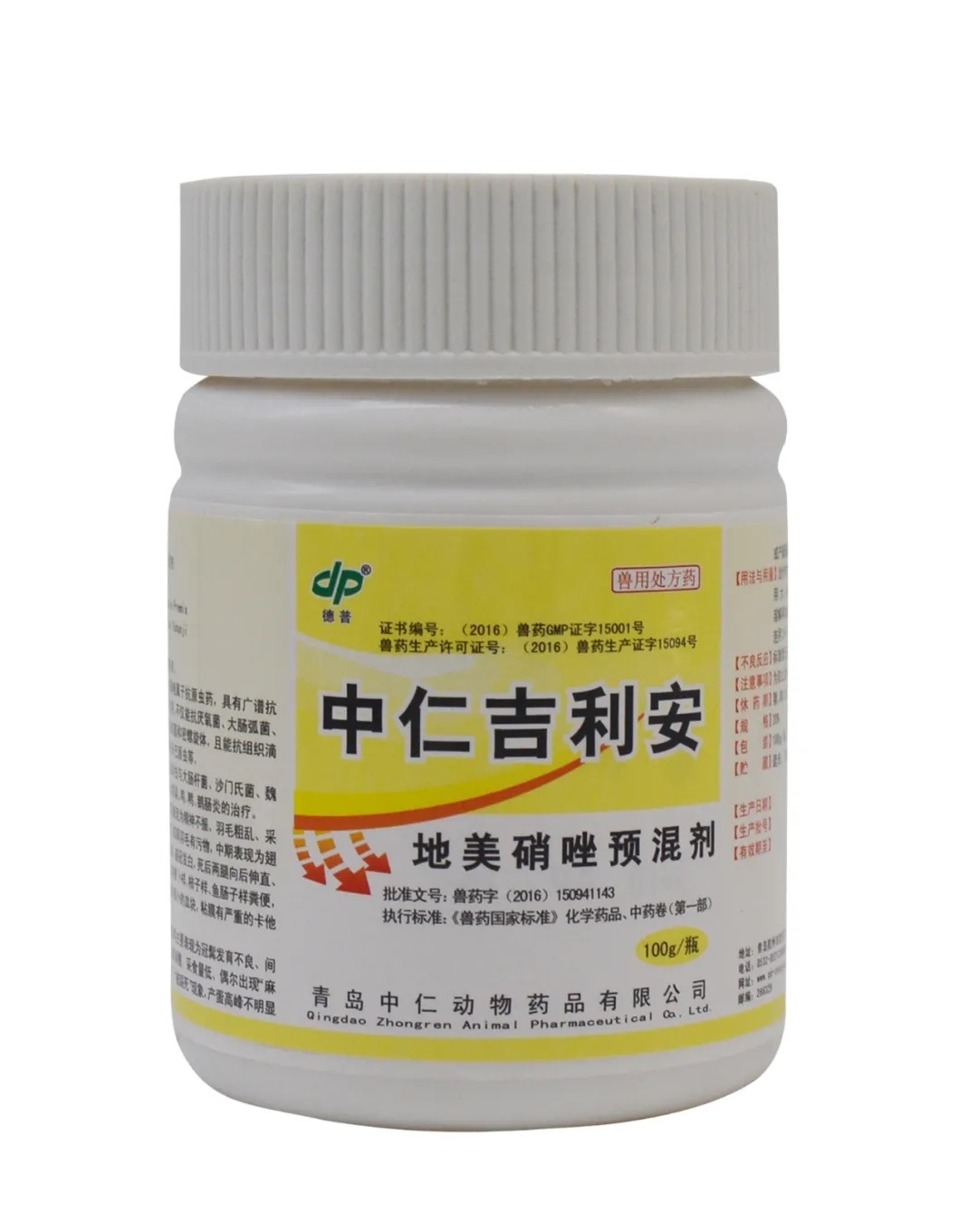
2. Zhongren Jillian (dimeonidazole) was mixed and fed for basic treatment, and metronidazole and penicillin aqueous solution were injected intravenously to kill Clostridium welchii in pigs with severe illness.

More news
Contact Us
Administrative service telephone:0532-85212368
Sales Advisory Phone:0086-532-85212381
E-mail:zhongrenyaoye@126.com
Address: No.6 Road, Jiaoxi Industrial Park, Jiaozhou City, Qingdao, Shandong Province

Qingdao Zhongren Animal Medicine Co., Ltd
Zhongren Aquatic Products