

News Center
A modern veterinary drug GMP pharmaceutical enterprise relying on high technology, integrating scientific research, development, production, sales and service
Symptoms and Prevention of Cold in Ducklings
Release time:
2022-05-05
Symptoms of a cold in ducklings
1. Clinical symptoms
① The main symptoms were high fever, decreased feed intake, depression, tears and loose feathers of the ducks.
② pull egg white-like white, light yellow or green watery loose stool; neck back arch, some neurological symptoms.
③ Respiratory symptoms, coughing, sneezing, dyspnea, neck stretching and wheezing.
④ The disease started from one end of the duck house and quickly spread to the whole group. Middle and late morbidity mortality is higher.
2. Symptom of autopsy
The abdominal organs of the newly dead ducks were hot, with coronary fat and myocardial hemorrhage, and white purulent necrosis of individual myocardium. Thickening of air sacs; Some have pericarditis, with a thick layer of white purulent on glandular gastric mucosa, empty muscle stomach or green contents; Cecal tonsil swelling and bleeding, rectal intestinal wall striped bleeding; Pancreatic flushing, individual bleeding or slight necrosis; Spleen enlargement was mottled with focal necrosis; the kidney is swollen with urate deposits; the liver is steatosis, and the nasal cavity is mucus.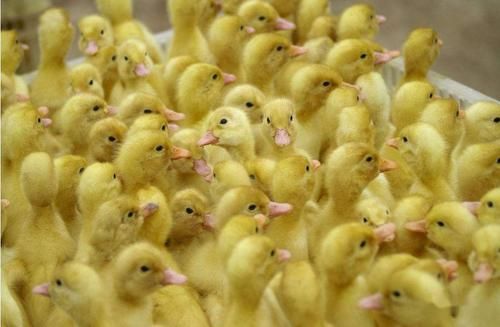
Prevention and treatment of common cold in ducklings
If the disease can be treated with the following scheme:
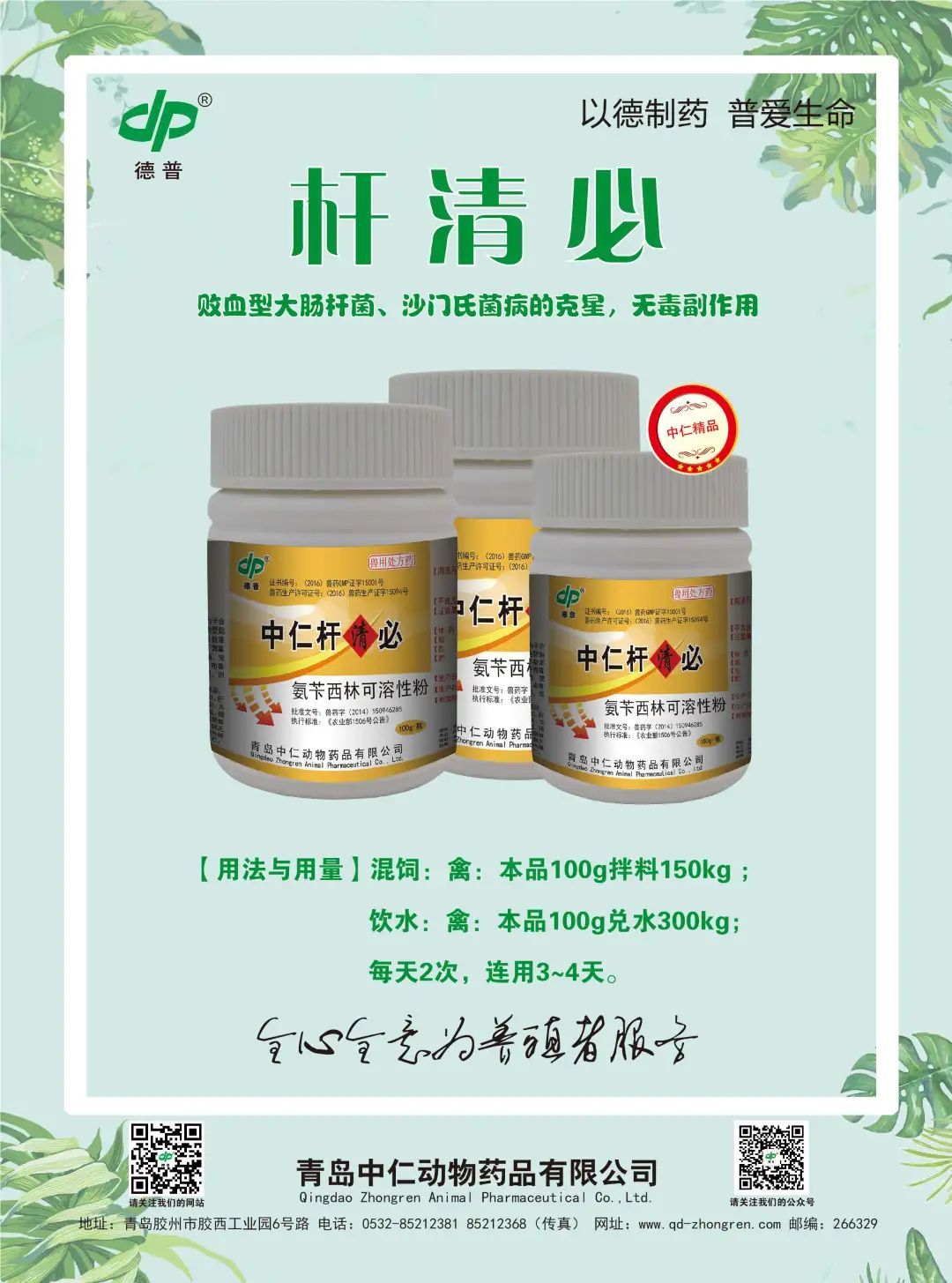
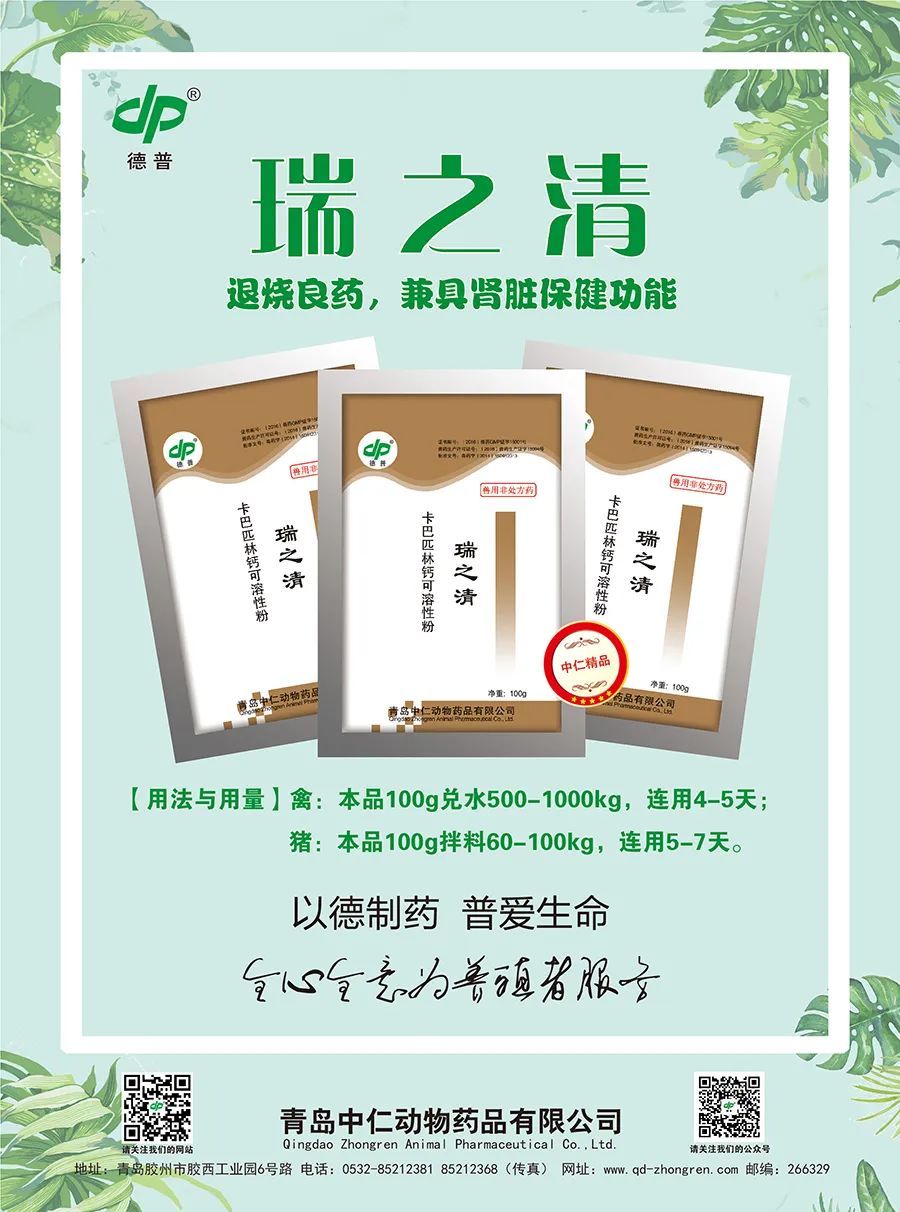
1. Panqing Granules 300kg of water/bag Ruiziqing 400kg of water/bag, once a day for 3 consecutive days.
2. In case of secondary infection: 300kg of water/bottle will be used together with Rod Qing
Product Details
veterinary drug name]
Common Name: Ampicillin Soluble Powder
main ingredient]Ampicillin
character]This product is white or almost white powder.
role and use]Beta-lactam antibiotics. It is used to treat infectious diseases caused by chicken sensitive bacteria, such as Escherichia coli, Salmonella, Pasteuella, Staphylococcus and Streptococcus.
Usage and dosage]With this product. Mixed drink: 1.2g of chicken per 1L of water.
adverse reaction]Anaphylactic reaction was occasionally seen.
[Note]](1) the laying period of laying hens is prohibited.
(2) Penicillin-resistant gram-positive bacteria infection should not be applied.
Previous:
More news
Contact Us
Administrative service telephone:0532-85212368
Sales Advisory Phone:0086-532-85212381
E-mail:zhongrenyaoye@126.com
Address: No.6 Road, Jiaoxi Industrial Park, Jiaozhou City, Qingdao, Shandong Province

Qingdao Zhongren Animal Medicine Co., Ltd
Zhongren Aquatic Products