

News Center
A modern veterinary drug GMP pharmaceutical enterprise relying on high technology, integrating scientific research, development, production, sales and service
Can breed sows for 5 consecutive months of decline! Can pig prices rise before the holiday?
Release time:
2021-12-26
Can breed sows for 5 consecutive months of decline! Can pig prices rise before the holiday?
After the rapid rebound in pig prices in October, with the recent further easing of pig supply, the demand for preserved meat in the south of China has been more than half, and the rebound in pig prices has been blocked. According to monitoring, the average price of three yuan live pigs outside the country was 16.54 yuan/kg yesterday, down 0.08 yuan/kg from the previous day.
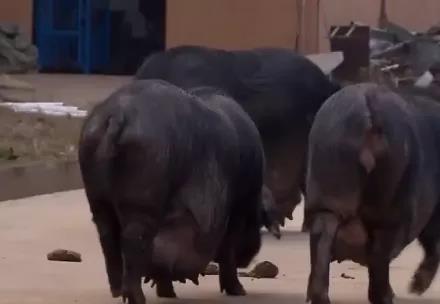
"The main reason for the rapid rebound in pig prices in mid-October is the phase of supply and demand mismatch. Before the National Day holiday, the market has looked at the price of pigs after the market, will be supposed to be in mid-October after the slaughter of pigs to the end of September, and then coincided with the southern salted preparation season ahead of schedule, the northern temperature drop to stimulate pork demand, the phase of supply and demand mismatch led to a rapid rise in mid-late October pigs." Everbright futures pig analyst Lu Pin said.
It is worth noting that,The overall supply of pigs is still relatively abundant, and the stock of pigs has returned to the high level before the African swine fever.It is understood that due to the high number of piglets born in the country from April to June this year, the problem of lack of supply was quickly resolved. In addition, the number of breeding sows in my country in November was 42.96 million. Although it fell for 5 consecutive months, it was still 6% higher than the normal number.
“Against the backdrop of ample supply of pig production capacity, we define this round of pig price increases as just a rebound in the downward segment of the 'pig cycle. At the end of the year, slaughtering enterprises pay more attention to slaughtering profits, and the phenomenon of price pressure is obvious., due to abundant supply, the breeding end to carry the price psychology has been greatly impacted, pig slaughter weight in the past two weeks has been a more obvious downward trend, superimposed on the demand side of the lower expectations, pig prices began to weak downward." Lu Pin said.
Wang Jun, an agricultural product analyst at Minmetals Futures, believes that the in stock rebound in pig prices is blocked, which can be seen from both supply and demand. Generally speaking, the main reason for the weakening of pig prices in December is the considerable increase in supply and demand. The performance is flat.
On the supply side, Wang Jun said that the overall supply from October to November was restricted.On the one hand, the accelerated decline in in stock from August to September overdrawn part of the supply, resulting in a small gap in supply from October, especially the shortage of fat pigs. On the other hand, the bottoming out of in stock in October has changed the consensus expectation of the market, and the farmers' behavior of increasing fat has aggravated the shortage of supply. And after entering December, the pre-pressure column of pigs have the need to be out of the column before the festival, coupled with the pig storage column is still in an increasing trend, the supply side of the marginal increase in the trend is very obvious. The demand side has not been able to relay well since December, mainly because this year's demand has been overdrawn in October.
Futures Daily reporter learned,The current pig price of 16 yuan/kg, basically reached the breeding end of the break-even state.Lu Pin said that in November, the number of live pigs produced by major listed pig companies dropped significantly compared with October, mainly due to the adjustment of the company's slaughter rhythm. On the premise that each company completes the annual slaughter task, it is expected that in December The slaughter volume of major pig companies increased month-on-month, the market supply remained high, and the upward pressure on pig prices remained high.
In Lu Pin's view, the unexpected rebound in October has slowed down the pace of pig production capacity, but it will not stop. As the peak demand season draws to a close, the market will continue to return to the main theme of improving production efficiency and eliminating backward production capacity.
"In terms of indicators such as the ability to breed sows, small and medium-sized pigs out of the slaughter and piglet births, the supply side is still in a marginal increase in the future, and without regard to weight and the rhythm of the slaughter, the supply-side pressure** will occur in the second quarter of 1. next year." Wang Jun said.
Currently,Seasonal consumption is still the main upward driving force of the market.However, Lu Pin said that this week, the price of live pigs in the southwestern provinces has seen a significant drop, and the average weight of live pigs across the country has also begun to decline, reflecting to a certain extent that the demand for curing is coming to an end. This year, the preparation of cured meat started earlier, and there is also the expectation of an early end. In addition, the winter solstice has passed, and the time for pork consumption to remain high will determine the trend of short-term pig prices.
“According to the seasonal law of pig prices, the probability of pig prices after the Spring Festival will come out of a wave of downward trend, but the breeding end of the stage of the sentiment will determine the short-term trend of pig prices, the current pig futures 2203 contract discount in stock of 2000 yuan/ton, reflecting the market for the trend of pig prices after the Spring Festival there is a certain degree of pessimism."Lu Pin said that as to whether the trend of pig prices after this year's National Day will be replicated around the Spring Festival, it depends on the market's prediction of pig prices in the future, and whether there will be a large number of early slaughter before the Spring Festival.
In Wang Jun's view, after the winter solstice, as more than half of the centralized stocking such as salting has been completed, the peak season of demand is nearing the end. Although there are still some lagging demand for stocking before the Spring Festival, it is diminishing from the margin. In addition, the pressure on the supply side is still great, and it is more difficult to start the recent rise in pig prices.
What are the fundamentals of American hogs and Chinese hogs? How does the market price interpret? The following is the view of Kong Hailan, an analyst at Everbright Futures:
U.S. hog prices fell seasonally in the fourth quarter, but remained above historical levels. U.S. pig and pork prices rose year-on-year due to the overall decline in slaughter. As pig processing enterprises can effectively transmit the rise in pig prices to the downstream, processing enterprises are more profitable at this stage. In October, U.S. pork wholesalers increased their sales prices by 10 percent from a year earlier. In November, the purchase price of live pigs for U.S. pig processing companies rose 12.3 percent from last year.
In the fourth quarter of 2021, the problem of hog overcapacity in China has not yet been effectively resolved, and short-term market supply still puts some pressure on prices. Near the end of the year, pig terminal market demand increased less than expected, the performance is more flat. Under the combined effect of supply and demand, pig prices continue to be under pressure.
U.S. slaughter declines year-over-year, slaughter weight gains
The previous report mentioned that the slaughterhouse was restricted due to the outbreak and other related factors. **Recently, as this situation has improved, the operating rate of slaughtering enterprises has increased more than expected. In early November, the U.S. pig slaughter increased, and the U.S. Department of Agriculture raised the slaughter volume by 55 million pounds to 7.2 billion pounds in the fourth quarter. Although the number of slaughterhouses in the United States increased significantly in November, the number of slaughterhouses in November was still 3.7 lower than that in the same period last year. There are two main reasons: first, the start-up of slaughtering enterprises is limited; second, due to the low stock of pigs in the United States in the second quarter, there are few pigs available for slaughter. Under the influence of these two important factors, the number of live pigs for slaughter decreased compared with the same period last year, which gave a certain boost to the price of pigs in the United States.
Last week, U.S. pigs weighed 217 pounds after slaughter, lower than the same period last year, but still 2.6 pounds higher than the average for the same period in the previous five years. The increase in the weight of pigs in the column has to some extent compensated for the impact of the decline in the amount of slaughter on the supply of the end market. As a result, the short-term U.S. market pig terminal supply declined slightly.
Exports are expected to fall in the fourth quarter, and overall U.S. pork demand may fall.
Taking into account the fourth-quarter estimate of U.S. pork exports, the full-year estimate for U.S. pork exports in 2021 is 3.265 million tons, down about 2 percent from 2020. October data showed that U.S. pork exports to Mexico and other Latin American countries can partially offset the negative impact of the decline in imports from Asian countries. However, taking together the full year, U.S. pork exports declined in 2021 compared to 2020, with some adverse impact on demand.
Domestic terminal demand is weaker than expected, and the start-up rate of slaughtering enterprises is lower than normal years.
According to the seasonal pattern of pig demand, the winter solstice solar term to the following year's Spring Festival, the terminal demand reached the whole year * * point. At the same time, as the temperature drops, terminal consumption slowly increases. After entering the winter, the start-up rate of slaughtering enterprises continued to pick up, and reached the whole year before the Spring Festival.
However, judging from the current performance of the terminal market, the market is relatively sluggish, downstream procurement is not active, and slaughtering enterprises have not improved significantly. As a result, the recent operating rate of slaughtering enterprises is weaker than market expectations. On December 16, Zhuochuang sample point statistics showed that the national pig slaughtering enterprise start-up rate of 32.57, lower than the national day after the annual **point of 1.77 percentage points, and lower than the 2016-2018 three-year historical average of 13.21 percentage points.
The average weight of the column decreases, and the supply pressure moves backward.
After the National Day, with the continued strength of pig prices, farmers reluctant to sell resulting in the continued increase in pig slaughter weight. After entering December, the enthusiasm of the big pig pressure bar decreased, and the return of the bar continued to decline. According to the weekly slaughter weight data of Zhuochuang sample points, on December 16, the average weekly weight of Chinese live pigs was 123.46kg/head, down 1.93kg/head from the end of November.
From the perspective of pig slaughter, the number of pig slaughter in November decreased significantly compared with October. Zhuochuang tracking sample point data show that in November, the national pig slaughter fell 14.77 month-on-month. From the current fundamentals, December breeding main body out of the column stable, pig out of the column pressure after the probability of large. As the market is generally bearish on the market after the market, do not rule out the possibility of the end of the breeding subject accelerated out of the column.
More news
Contact Us
Administrative service telephone:0532-85212368
Sales Advisory Phone:0086-532-85212381
E-mail:zhongrenyaoye@126.com
Address: No.6 Road, Jiaoxi Industrial Park, Jiaozhou City, Qingdao, Shandong Province

Qingdao Zhongren Animal Medicine Co., Ltd
Zhongren Aquatic Products