

News Center
A modern veterinary drug GMP pharmaceutical enterprise relying on high technology, integrating scientific research, development, production, sales and service
Five departments jointly released pig product information data pig cycle inflection point?
Release time:
2021-12-12
Five departments jointly released pig product information data pig cycle inflection point?
Pig cycle is the market performance of pig price fluctuations, pig farmers should be more counter-cyclical thinking, in the peak or trough to deal with in advance, pre-planned. In the process of reducing costs and increasing efficiency, the pig industry should assess the situation, balance short-term investment and long-term investment, strengthen cooperation with the industrial Internet, and improve the level of intelligent pig raising and overall production efficiency.
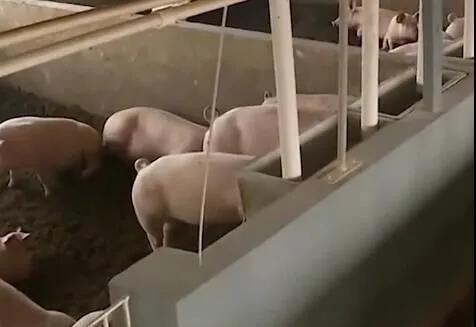
A few days ago, the five departments jointly released pig product information data. At the end of October, there were 43.48 million sows in stock nationwide, equivalent to 106 per cent of the normal population, in the yellow area.It is reported that Muyuan, Wen's, Zhengbang, New Hope and others revealed their plans for the whole year of 2021 on the investor question-and-answer platform. According to preliminary calculations, the four major pig enterprises are expected to produce more than 75 million pigs for the whole year.
Through the efforts of the whole industry, pig production has been fully restored in the second quarter of this year. From June to September, the average price of slaughter pigs fell all the way below the cost line, and the pig industry fell into a loss. In the fourth quarter, market prices rebounded and breeding losses eased. In October, the average loss per head of free-range and large-scale pig breeding was 349 yuan and 335 yuan respectively, 42.2 and 49.8 percent less than in September. In November, the price of live pigs was higher than the cost line, and some farmers began to make profits. From this point of view, the recent rise in pig prices is a restorative rise, mainly due to the end of the year pork consumption demand pull, from the price level, pig prices are currently in a more reasonable range.
At present, the fundamentals of relatively loose production and supply of live pigs and pork have not changed, which means that the supply of pork is fully guaranteed for the next period of time, and the inflection point of the current pig cycle has not really arrived. According to monitoring, since March, the number of newborn piglets in large-scale pig farms nationwide has been more than 30 million per month, and it has continued to grow. According to the law, piglets can be released after 6 months of fattening, and it is expected that the number of fattened pigs on the market will increase significantly year-on-year in the first quarter of next year. In October, the national stock of breeding sows was still 6% more than the normal stock, indicating that the relative oversupply of live pigs will continue for some time.
The number of small and medium-sized farms accounts for 99% of the country's pig farms, and its pig breeding volume is close to half of the country's.The scattered group of farmers is huge, from the subjective will, all parties want to avoid the impact of pig price fluctuations on themselves, but **eventually it is easy to become a" chase up and kill down "pro-cyclical behavior. Many subjects are lucky. When the price is good, they all hope that others will go to production capacity and produce as much as possible. Due to the scale of the farm has the capital advantage is not willing to easily reduce production, retail farmers have the cost advantage to bear low prices, resulting in the current round to slow down the speed of production capacity, the bottom time may be lengthened. Pig cycle is the market performance of pig price fluctuations, pig farmers should be more counter-cyclical thinking, in the peak or trough to deal with in advance, pre-planned. At present, do not blindly bet on the market outlook because of the rebound in pig prices, and do not rush to expand production capacity to avoid large losses in the later period.
For the pig industry, you can't control the price of pigs, but you can control the cost of raising pigs.At any time, the ability to raise pigs at low cost is the core competitiveness of the pig industry. Under the current super pig cycle, the proportion of large-scale breeding increased from 46.9 percent in 2017 to 57.1 percent in 2020, with a rapid increase in industry concentration and accelerated development of industrial chain integration. However, the problem of irregular cost distribution has become increasingly prominent. This is a phased phenomenon caused by the rapid expansion of the industry brought about by high profits. In detail, the production costs of different models vary greatly, large-scale farms are different from retail investors, self-breeding is different from outsourcing piglets, and "enterprise + farmer" is different from the comprehensive investment model. Therefore, in the process of reducing costs and increasing efficiency, the pig industry should assess the situation, balance short-term investment and long-term investment, strengthen cooperation with the industrial Internet, and improve the level of intelligent pig raising and overall production efficiency.
For management, meat prices can fluctuate, but avoid short-term ups and downs.To adjust and improve the past focus on stable production methods, in the front end to regulate the amount of breeding sows, in the middle end to stabilize the scale of farm households, in the back end to promote pork processing. The ability to breed sows is the "master switch". As long as the stock of sows does not change much, piglet production will be guaranteed, and pig supply and pork prices will be relatively stable. The regular release of signals that can breed sows can guide a reasonable production capacity layout in advance from the source. Scale farm households are the "main force". It is necessary to support leading enterprises and small and medium-sized farmers to form a community of interests through "company farmers", trusteeship leasing, technology sharing, brand co-creation, and so on. Meat processing enterprises are "reservoir". To do this, not only can adjust the pace of pork listing, but also optimize the distribution of industry profits. In order to absorb the production capacity of Sichuan pigs, Sichuan Province has cultivated concentrated areas for deep processing of pork in three places, which is worth learning from.
Source: Economic Daily, China Economic Net
More news
Contact Us
Administrative service telephone:0532-85212368
Sales Advisory Phone:0086-532-85212381
E-mail:zhongrenyaoye@126.com
Address: No.6 Road, Jiaoxi Industrial Park, Jiaozhou City, Qingdao, Shandong Province

Qingdao Zhongren Animal Medicine Co., Ltd
Zhongren Aquatic Products