

News Center
A modern veterinary drug GMP pharmaceutical enterprise relying on high technology, integrating scientific research, development, production, sales and service
[First-line Case] Treatment Scheme of Pelteobagrus fulvidraco "Split Head Disease"
Release time:
2021-08-19
[First-line Case] Treatment Scheme of Pelteobagrus fulvidraco "Split Head Disease"
"Split head disease" is a common disease in the breeding process of Pelteobagrus fulvidraco in recent years. From fry to adult fish will be sick, the water temperature between 18~30 ℃, 25~28 ℃ incidence is more serious, and every year from June to September is the peak of the disease. The disease has a high mortality rate and is difficult to treat.
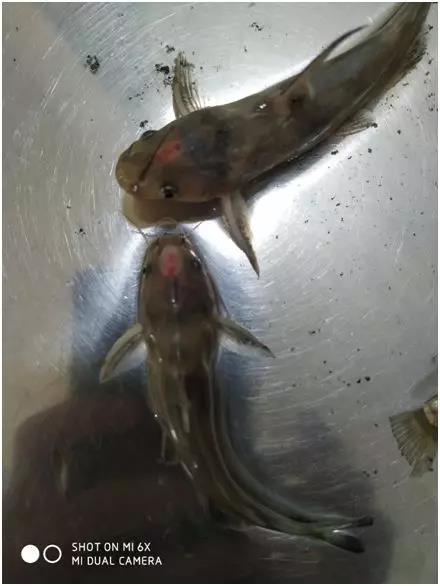
Head "split" is the main feature of "split head" disease. "Split head" is already the terminal symptom of the disease. The top of the head of the fish with early disease is congested, bleeding and red, forming a strip of raised or bleeding ulcer on the top of the skull.
There are also cases where the head bones are directly cracked and there is no banded bleeding ulcer zone. Sick fish abdominal swelling, fin base, operculum congestion, anal congestion, outgrowth. The abdominal cavity contains a large amount of blood-containing ascites, hepatomegaly, intestinal congestion, inflammation, intestinal cavity filled with pale yellow water-like fluid. Not the occurrence of "split head" disease of the yellow catfish will appear "split head" symptoms.
Location: Lexiu Town, Shunde District, Foshan City
Breed species: Pelteobagrus fulvidraco
Aquaculture water surface: 7 mu 1.5 meters deep
Specific conditions: ammonia nitrogen, nitrite on the high side, normal pH. A handful of wheel bugs. Head dehiscence, ascites, gastrointestinal bleeding.
Day:Weedley.2 mu/bottle +Zhongren II1 mu/bottle
② Days:Zhongren compound iodine2 mu/bottle +double yellow essence2 mu/bottle
Stop or reduce the material for two days
3 days: reduce the feeding, and the feeding is reduced to 1/2 of the normal feeding amount,Florfenicol + Astragalus Polysaccharide + Aquatic Special Multidimensional + Bleeding Stop/4-6 package material, continuous use for 5 days.
Effect feedback: After taking the medicine, the number of drugs was controlled from more than 50 to about 10 (continuous tracking for one week is true)
(2) There are many residual baits and excreta in the pond, and the water pollution is serious. Poor water quality, high ammonia nitrogen, nitrite. The dissolved oxygen is low, and the demand of fish for dissolved oxygen can not be met for a long time, which affects the growth and physiological function of the body, and reduces the physique and immunity. When the external climate conditions of the pond water environment caused by mutations such as algae, water turbidity, etc., resulting in the superposition of the stress of aquatic animals, the disease is more likely to break out.
(3) lack of disease prevention awareness, no regular adjustment or improvement of water quality and substrate, oral prevention of fish disease.
More news
Contact Us
Administrative service telephone:0532-85212368
Sales Advisory Phone:0086-532-85212381
E-mail:zhongrenyaoye@126.com
Address: No.6 Road, Jiaoxi Industrial Park, Jiaozhou City, Qingdao, Shandong Province

Qingdao Zhongren Animal Medicine Co., Ltd
Zhongren Aquatic Products