

News Center
A modern veterinary drug GMP pharmaceutical enterprise relying on high technology, integrating scientific research, development, production, sales and service
Efficient feeding technology of lamb in winter
Release time:
2021-02-23

Lamb meat is popular because of its tender and easy digestion, less fat and more lean meat. Supplementary feeding of lamb in winter can make it grow faster, increase feed return rate, shorten fattening time, quickly cultivate high-standard lamb, significantly improve lamb meat yield, slaughter rate and commodity rate, and have good meat quality, short production cycle, low cost, fast lamb weight gain and high economic benefits. Therefore, the following describes a group of winter lamb efficient feeding technology for farmers reference.
machine supplementary feeding
In order to reduce feeding costs, some farmers are reluctant to supplement lambs and will maximize the use of low-cost summer pasture. However, supplementary feeding can ensure that the lamb becomes a ruminant with complete digestive function, that is, it can eat mixed feed well at a relatively young age to increase body weight, especially for double lambs and three lambs. After supplementary feeding, daily gain is usually increased, which can make lambs listed at a younger age. Under normal circumstances, supplementary feeding of lambs can reach the market weight 1 to 2 months in advance, shorten the feeding cycle, reduce the total amount of feed for lambs to maintain the nutrients needed for the body, not only reduce the cost of feeding, but also increase the economic income of farmers and reduce the probability of death, illness or injury of lambs. It would be advantageous for winter-born lambs to be on the market before the hot summer months, and for lambs to enter the feedlot at a younger age, allowing the farm to use the existing pasture to raise more ewes.
Lambs are better fed with supplements during the lactation phase than after weaning, and lambs begin to chew food at 1 week of age, but rely on breast milk for most of their nutrition until 3-4 weeks of age. Therefore, the daily supplement consumption is usually less than the average daily weight gain, that is, the feed conversion efficiency per unit supplement intake is quite high. Although lambs do not begin to consume large amounts of feed until 3 to 4 weeks of age, the small amount of supplements consumed is essential for establishing normal rumen function and developing feeding habits. 10~120 day old lambs generally average daily consumption of 0. 68kg supplement, of which 3 weeks of age consumption 0. 07kg, 40~50 days of age when the consumption of 0. 45~0. 68kg, 120 days of age when the consumption of 1. 36kg.
Supplementary feeding skills
The key to success is to get the lamb to feed the supplement as soon as possible. Supplements do not have to be complex, and the effect of a single diet prepared by lambs feeding pasture is usually the same as that of a compound diet, but with a supplement that is more palatable. Young lambs seem to prefer soybean meal, corn, bran and sweetened feeds, which should be chosen as the raw material of the diet when compounding the supplement.
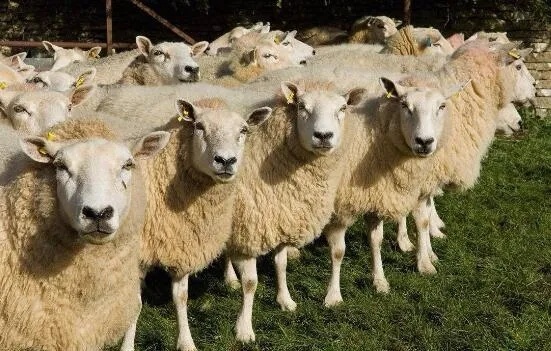
Lambs should start supplementary feeding at the age of 7~10 days. At this time, 1 fresh egg, 4 ml of cod liver oil and 2g of salt can be stirred evenly with 100 ml of boiled water. When cooled to 38 ℃ ~ 40 ℃, lambs should be fed 4~6 times a day, 50 ml each time. The ewe and the lamb usually live together and do not separate, and do not let the lamb feel that he has been separated from the ewe. The supplementary feeding pen should be located where the lamb can easily approach and the ewe cannot approach. The ewe and the lamb can see each other during supplementary feeding. The supplementary feeding place of the lamb is as attractive as possible, such as sunny, warm, dry and other places that are more attractive to the lamb. The supplementary feeding area for young animals should be equipped with sheep beds laid with bedding grass, and the feeding trough should be kept clean. In the supplementary feeding area or as close as possible to the supplementary feeding area, there should be drinking facilities. If lighting equipment is installed above the feeding trough, the lamb's feed intake can be increased. In short, if the lamb feeding area is set up reasonably, then the lamb will also like to rest in the feeding area.
Ewes and lambs can also be driven to a relatively small space around the feeding stall at night. As lambs do not like to be squeezed by ewes, the feeding stall will be used as a refuge. There are also breeders who put 1 to 2 ewes in the supplementary feeding column for a short time, and lure the lambs into the supplementary feeding column through this method. Although the ewe will eat supplements, but can only eat a very limited feed.
timely fattening
Lambs with normal growth and development and weaned or about to be weaned should be selected for fattening. The timing of fattening varies with different lamb breeds. In order to achieve the best fattening effect, lambs with more fat are usually fattened after weaning, and the formula of concentrate feed is adjusted, while lambs with less body fat are fattened 1-2 weeks after weaning. Ordinary lamb can choose regular fattening formula. Generally, meat sheep are selected as fattening lambs, and fattening lambs can also be produced by artificial breeding. The specific method is to do a good job of supplementary feeding for ewes in the late pregnancy to ensure their nutritional balance, so that the weight of the lambs produced at weaning can reach 20~30kg. The feed required for fattening is mainly corn, silage, high-quality forage and other feeds and premixes. In general, lamb fattening requires about 3kg of silage per day
Legume hay and cereal feed are selected for lamb fattening, and the proportion of the former is generally 40% ~ 50%, the latter 50% ~ 60%. In general roughage diets, wild hay can account for 10% ~ 20%, corn straw, soybean straw and other crop straws can account for 40% ~ 50%, straw micro-storage or silage corn accounts for 40% ~ 50%. Fattening lamb concentrate feed formula for corn 65%, 21%, bran 10%, stone powder 1. 7%, salt and baking soda 1%, mineral trace elements and vitamin additives 0. 3%.
Fattening sheep in the diet of roughage less and refined feed too much, easily lead to digestive diseases, affect the growth and development of lambs, is not conducive to fattening. Therefore, the roughage should not be less than 55% of the diet, and the concentrate should not be higher than 45% of the diet. At the same time should ensure the supply of adequate clean drinking water, to 3 to 4 times a day is appropriate. In the process of fattening, if the lamb's appetite is poor, dry beer grains and salt can be added to the concentrate to promote the lamb's appetite. In short, in all stages of fattening, we should pay attention to the weight gain and health of lambs, and adjust the fattening methods and technical programs accordingly.
Cold and warm
Lamb first away from the mother, the body temperature regulation center has not yet developed, and the winter climate is cold, if you do not pay attention to cold warm, it is easy to catch cold disease. In low temperature weather, the original grazing breeding should be changed to house feeding and captive breeding. If it is really necessary to stock outside the house, it should be between 11: 00 a.m. and 3: 00 p.m. The lamb house should be built in a leeward sunny place, covered with a wind shelter, the window glass should be cleaned to facilitate lighting, and plastic film should be used to close the loopholes to prevent thieves. Maintain a moderate feeding density and keep the air flowing. Before the advent of low temperature and severe cold weather, a comprehensive overhaul of infrastructure such as water, electricity, roads and livestock and poultry pens, grass storage warehouses, material storage warehouses, and fences should be carried out. Damaged livestock and poultry houses should be reinforced in time to prevent collapse. Door curtains should be hung on the doors to block the vents, and the aisles in the middle of the pens should be closed at any time to prevent thieves, drains and sweeping. Do not leak rain on the side, not ventilated, ground bedding grass, timely cleaning of stagnant water, the ground is not wet, in order to play the role of cold and warm.
In case of rain and snow, it is necessary to prevent rain from wetting the lamb and clear the snow in time to prevent the collapse of the enclosure. Heating facilities such as infrared heat preservation lamp and stove shall be hung in the enclosure. When using coal stoves and carbon stoves for heating, attention should be paid to heating safety and ventilation. The chimneys of coal stoves and carbon stoves must be led out of the shed to prevent carbon monoxide poisoning. Protective devices should be set around the heating facilities in the shed to prevent scalding lambs. During the day, let the lamb go outdoors and bask in the sun, receive fresh air and sunlight, increase the content of vitamin D and cholesterol in the body, promote the bone development of the lamb, enhance the resistance, and create a clean and warm living environment for the lamb.
Prevention of disease
Personnel and vehicles entering the site shall be strictly disinfected, and miscellaneous personnel are strictly prohibited from entering the production area. Fattening of grazing lambs should be dewormed and hoofed, and fattening of house-fed lambs should be dewormed. Usually use spray and bath and other ways of anthelmintic, also can be injected or oral abamectin, propyl benzene and so on. Vaccination should be used to prevent common infectious diseases. Generally, fattening lambs are injected intramuscularly or subcutaneously with triple vaccine, five joint vaccine, capripox vaccine and sheep foot-and-mouth disease vaccine.
Lamb's mouth sore is also a common disease, the disease is caused by the goat pustular dermatitis virus, in the mouth, lips and other areas of the skin to form papules, ulcers or warty scabs. This disease is a viral infectious disease, which seriously affects the health of lambs. Therefore, once the lamb is ill, it should be isolated immediately, treated with potassium permanganate, iodine tincture, glycerin, violet, erythromycin ointment and other external drugs, and thoroughly disinfect the pens and appliances.
Pneumonia is also a disease with a high incidence of lambs, mainly caused by malnutrition, lack of vitamins, and premature weaning, which lead to reduced resistance. The prevention of lamb pneumonia should strengthen the management of lamb feeding, and feed enough breast milk, keep the sheep house dry and warm, well ventilated, the treatment of pneumonia can be penicillin or streptomycin intramuscular injection, 2 times a day.
Lambs are susceptible to white myopathy, a trace element deficiency associated with skeletal and cardiac muscle degeneration with dyskinesia and acute myocardial necrosis. Sick lambs will appear lackluster, arch back, movement difficulties, limb weakness and other symptoms. It is found that this disease should be timely use of selenium preparation for intramuscular injection, strengthen the management of ewes, supply high-quality legume forage, so that ewes can get selenium supplement before lambing, and can also reduce the occurrence of this disease.
Mineral deficiency is also a common disease of lambs. The main manifestations of diseased lambs are thin and weak, with rough coat, weakened appetite, molar teeth, dry oral cavity, gray and white feces, licking, biting and swallowing foreign bodies, especially gnawing wall circle soil. Mineral additives and trace elements such as selenium and iron should be supplemented in advance.
More news
Contact Us
Administrative service telephone:0532-85212368
Sales Advisory Phone:0086-532-85212381
E-mail:zhongrenyaoye@126.com
Address: No.6 Road, Jiaoxi Industrial Park, Jiaozhou City, Qingdao, Shandong Province

Qingdao Zhongren Animal Medicine Co., Ltd
Zhongren Aquatic Products