
Key Considerations for Temperature and Ventilation Management in Closed-Style Poultry Houses During Autumn and Winter
2026-06-05
Each year, as autumn and winter approach, egg‑ and meat‑producing poultry farms face significant challenges in managing and controlling the indoor environment of their chicken houses. With the onset of cooler weather, ventilation transitions from vertical to transitional modes, requiring timely adjustments to target temperatures and airflow rates in response to external temperature changes. As winter sets in and temperatures drop to their lowest levels, the system enters the minimum‑ventilation phase, necessitating careful coordination to balance heat retention with adequate air exchange.
Whether temperature and ventilation management can be effectively implemented during the autumn and winter seasons depends on carefully adhering to natural principles and the physiological needs of the chickens, while managing according to the environmental control principles of “appropriate, stable, and uniform” to create a comfortable growing environment for the flock. However, achieving such appropriateness, stability, and uniformity in the poultry house is influenced by numerous factors, including the structure of the house, ventilation and heating systems, changes in the age of the flock, seasonal weather variations, and husbandry practices. Particularly in autumn and winter, it is essential to thoroughly understand the principles of environmental control and master various management techniques.
I. Creating a Suitable Environment for the Chicken Flock
Environmental suitability can be defined as physiological appropriateness for the chickens, aiming to ensure that their perceived body temperature is comfortable and that ventilation levels are adequate, based on their intrinsic physiological characteristics. This, in turn, maintains a rearing environment conducive to growth and production, thereby maximizing their productive performance. To achieve environmental suitability, the following three key measures must be implemented:
- Develop a reasonable temperature schedule based on historical experience and the current season.
Poultry (egg and meat) farms should establish a temperature‑control protocol for each batch of birds prior to their arrival, as production performance is highly seasonal; developing such a protocol is akin to preparing an emergency response plan.
When developing a temperature regimen, it is essential to consider both the successes and challenges of temperature management observed in historical batches during the same period, as well as the season in which the current batch is being raised—particularly the seasonal conditions prevailing from the late rearing phase through the peak production stage. For example, although 18°C to 25°C is the optimal temperature range for the rearing and laying periods, when outdoor temperatures are low and the house’s insulation is inadequate to maintain the target range, the temperature can be slightly reduced to ensure adequate ventilation. Specifically, while maintaining the minimum required air exchange rate, the house temperature should be kept as close as possible to 18°C; this approach benefits both growth performance and productive output. Reference temperature schedules for brooding and rearing during the autumn and winter seasons are provided in Table 1.

- Adjust the temperature standards based on “observing the chickens’ behavior” and “perceived temperature.”
Once a temperature‑control protocol has been established, it should not be rigidly applied in practice; instead, carefully monitor the flock’s overall condition and make flexible adjustments based on observed behavior—“adjusting temperature according to the chickens” and assessing whether the perceived temperature is appropriate.
How do you “adjust heating based on the chickens”? It involves assessing the flock’s behavior to determine whether the house temperature is appropriate, and using this information to fine-tune the environment: when the set temperature is too high, chickens—regardless of age—will spread their wings, move away from heat sources, and pant; conversely, when the temperature is too low, they will huddle together, seek out heat sources, and become less active—this tendency is especially pronounced in younger flocks or after lights-out at night.
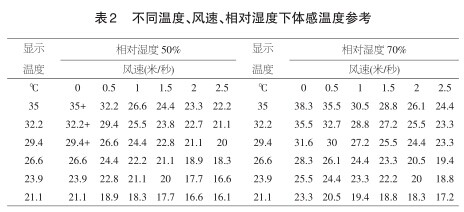
How can you determine whether the perceived temperature in a chicken flock is appropriate? Perceived temperature should be considered in every season. Inside the house, the thermometer may show a reading within the normal range, yet the birds may exhibit clear signs of being too cold or too hot—this is due to the influence of indoor humidity and air velocity, which can make the perceived temperature unsuitable for the flock. For example, when the target temperature in the poultry house is set at 27°C, the actual temperature is 28°C, relative humidity is 50%, and wind speed is 0.5 m/s, the chickens’ actual perceived temperature is 26°C—1°C lower than the target of 27°C. A lower perceived temperature manifests as erect neck and head feathers, reduced movement with a tucked‑in posture; in severe cases, birds may close their eyes and develop nasal discharge. In such situations, consider raising the target temperature or reducing the ventilation rate. Reference values for perceived temperature under different combinations of temperature, wind speed, and relative humidity are provided in Table 2.
- Adjust the ventilation rate of the chicken house based on the temperature difference between inside and outside.
In the course of production management, most poultry producers are familiar with and adhere to the principle of “keeping chickens warm in spring and letting them endure cool temperatures in autumn” when regulating barn temperatures. Nevertheless, certain issues still arise each autumn or during the transition from autumn to winter. The primary reason is a failure to fully grasp the essence of “autumn chilling”; producers continue to apply summer‑style ventilation and cooling strategies, relying on the wind‑cooling effect to lower flock temperatures. As a result, what should be “autumn chilling” ends up becoming “autumn blowing,” leaving the birds unable to adapt to seasonal changes. Instead, cold stress weakens their physical condition, paving the way for secondary or opportunistic diseases.
During the autumn and winter seasons, it is essential to determine an appropriate ventilation rate for the poultry house, which should be based on the temperature difference between inside and outside. When the outdoor temperature falls below the target indoor temperature, maintain a suitable ventilation rate in autumn or the minimum ventilation rate in winter. Conversely, when the outdoor temperature exceeds the target indoor temperature—since the incoming air is no longer cold—increasing the number of fans can help ensure the birds’ comfort, particularly during the afternoon. Drawing on years of experience, under normal conditions, the optimal air exchange rate is approximately 3–4 m³ per kg of live bird weight per hour. In practical production, the required ventilation volume can be calculated based on flock size, individual bird weight, and the specific ventilation needs of each bird.
For example: With 32,000 five-week-old chicks weighing 0.35 kg, a target house temperature of 26°C, an outdoor minimum night temperature of 11°C, and a daytime maximum of 30°C, the nighttime and daytime conditions correspond to two distinct seasons. The appropriate ventilation rate is approximately 2.5–8 m³/kg/h, requiring the operation of 0.8–2.5 exhaust fans, each with a capacity of 36,000 m³/h.
II. Creating a Stable Environment for the Chicken Flock
Environmental stability can be defined as temporal consistency, with the goal of ensuring that the flock is maintained in an optimal environment at all times—covering stability across the day–night cycle, within the operational cycle, and during the brief moments when fans are started or stopped.
1. Achieve stability across day and night periods
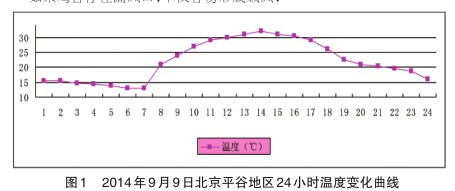
Autumn is a season characterized by significant diurnal temperature variations. In northern regions, a typical autumn day can be divided into four distinct temperature phases: the warming phase (6:00–12:00), the high‑temperature phase (12:00–17:00), the cooling phase (17:00–24:00), and the low‑temperature phase (0:00–6:00). These phases may vary slightly depending on the specific region and prevailing weather conditions. The daily temperature fluctuations in autumn effectively simulate the progression of spring, summer, autumn, and winter; accordingly, ventilation management in poultry houses should be adjusted to reflect seasonal needs. During the warming phase (6:00–12:00), avoid excessive ventilation or overly high air velocities that could cause stress to the flock; closely monitor for signs such as neck‑retracting and immobility. If, within the same house, the birds appear less active in the morning than in the afternoon, this may indicate that excessive ventilation is causing discomfort. In the high‑temperature phase (12:00–17:00), prioritize ventilation to reduce heat while ensuring the birds remain comfortable and that dust and stale air are adequately expelled. During the cooling phase (17:00–24:00), gradually decrease ventilation rates, but continue to maintain good air quality inside the house. In the low‑temperature phase (0:00–6:00), adopt intermittent ventilation to prevent prolonged exposure to cold stress. Figure 1 shows the 24‑hour outdoor temperature profile for the Pinggu district of Beijing on September 9, 2014.
2. Achieve stability within the cycle time
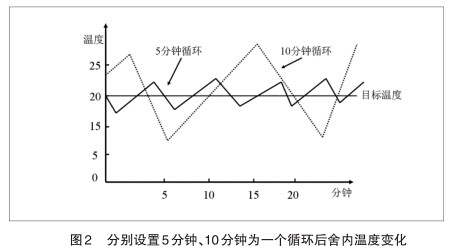
During autumn nights and in the colder periods of winter, intermittent ventilation is typically employed, primarily to ensure adequate air exchange and stable temperatures within the poultry house. This method can be implemented either through temperature‑based control or time‑based control. When using time‑based control, cycles of 5 or 10 minutes are commonly set; shorter cycles lead to greater temperature stability. For instance, if the house temperature drops below 18°C in winter, the cycle duration can be further reduced—for example, operating the fans for 1 minute and pausing for 2 minutes, or running them for 1 minute and then pausing for 1 minute. Depending on the specific temperature range, multiple ventilation levels can also be configured to enhance thermal stability. After setting cycles of 5 and 10 minutes, the resulting indoor temperature fluctuations are illustrated in Figure 2.
3. Stability during the start-up and shutdown of the fan
When implementing mechanical ventilation, one aspect that managers often overlook is whether the temperature remains stable during the fan’s start-up and shut-down phases. For example, if a single fan in the house is set to activate at 20°C and two fans at 21°C… is it reasonable to double the ventilation rate whenever the house temperature exceeds 1°C or 2°C? How much does the fan’s on‑off cycle affect the chickens’ perceived temperature? Often, adding more fans results in an uncomfortable perceived temperature for the flock; prolonged exposure to alternating hot and cold conditions can weaken their health. These issues warrant careful consideration by all managers. Therefore, when increasing the number of fans, it is essential not only to assess whether the ventilation rate is appropriate but also to evaluate how much the additional fans will lower the birds’ perceived temperature. If an extra fan is unnecessary, consider using variable‑frequency drives as a transitional measure to mitigate the stress caused by abrupt temperature fluctuations.
3. Create a uniform environment for the flock.
Environmental uniformity refers to spatial consistency, with the goal of ensuring that every bird in the house is exposed to an optimal environment, so that temperature and air velocity are evenly distributed throughout the front and rear, along all walls, and across all levels. To maintain uniform conditions inside the house, it is essential to ensure adequate airtightness and thermal insulation, to keep air velocity consistent at all locations, and to establish an appropriately balanced negative pressure level.
1. Ensure the chicken house is airtight and well insulated.
If the chicken house has air leaks, not only can drafts develop, compromising temperature uniformity, but ventilation efficiency will also be impaired. Therefore, appropriate insulation measures should be implemented for the house doors and fans. Typically, the front and rear sections of the house experience the lowest perceived temperatures, with chickens in these areas essentially acting as “sentinels,” the first to react to temperature changes. This is primarily due to the influence of the front‑door opening and the rear‑end fans; thus, it is advisable to hang thick cotton curtains at the entrance and to seal any idle fans with insulating panels.
2. Maintain uniform air velocity throughout the chicken house.
Whenever there is wind speed, a wind‑cooling effect occurs. If the air velocity within the poultry house is uneven, it will inevitably lead to non‑uniform perceived temperatures and uneven ventilation across the flock, which can significantly impair the birds’ normal growth. During production, maintaining a suitably set negative pressure can help ensure uniform air velocity throughout the house.
During the autumn and winter seasons, air enters the poultry house through ventilation windows on both sides. The wind speed through these windows is primarily influenced by negative pressure: the higher the negative pressure, the greater the airflow into the house, and vice versa. With increasing levels of automation, many modern poultry houses now rely on pre-set negative-pressure settings to automatically regulate the opening size of the air inlets.
As for the question of “what negative pressure setting is most appropriate,” there is currently no universally accepted standard; only relative suitability can be determined. During the autumn and winter seasons, the primary purpose of ventilation is to ensure that incoming cold air has sufficient velocity to reach the center of the poultry house and undergo adequate pre‑heating before being directed toward the flock. Consequently, chicken houses with different spans require different levels of negative pressure. Taking a 13‑meter‑span house as an example, a negative pressure of approximately 0.08 inches of water column would be more suitable.
When outdoor temperatures in autumn are not particularly low, if the incoming air can reach the center of the poultry house and ensure uniform ventilation, it is preferable to maintain the lowest possible negative pressure. This is because, the closer the ventilation in the house approximates natural airflow, the more it aligns with natural principles and the physiological needs of the birds, truly enabling “autumn chilling.” For the chickens themselves, negative pressure is unnecessary; it arises from artificial ventilation managed by the operator. Higher negative pressure not only intensifies the wind‑cooling effect and increases the risk of cold stress, but also makes the house more prone to oxygen deficiency, both of which are detrimental to flock growth and production.
Key words:
Contact Us
Administrative service telephone:0532-85212368
Sales Advisory Phone:0086-532-85212381
E-mail:zhongrenyaoye@126.com
Address: No.6 Road, Jiaoxi Industrial Park, Jiaozhou City, Qingdao, Shandong Province

Qingdao Zhongren Animal Medicine Co., Ltd
Zhongren Aquatic Products