
Symptoms and Prevention of Avian Airbag Inflammation
2023-09-04
Qingdao Zhongren Animal Medicine Co., Ltd
Zhongren kinetic drug
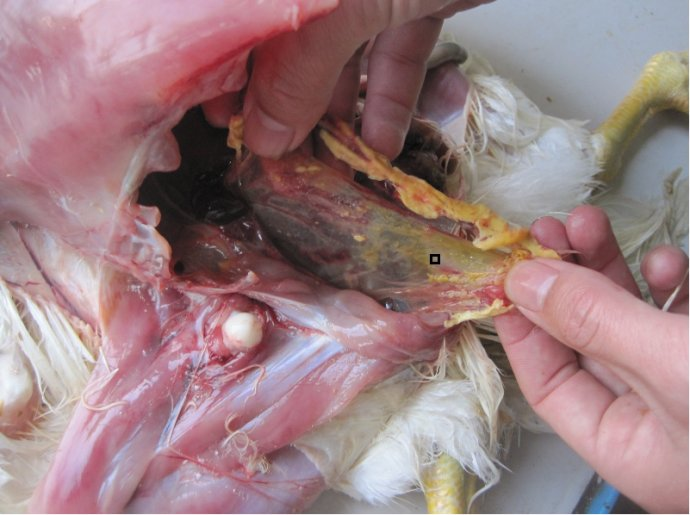
In recent years, broiler "air bag inflammation" cases are not uncommon, concentrated in15-25The age, mortality is very high, the effect of many oral treatment drugs is not obvious, and the poultry industry has caused great losses. Through clinical practice, the author has achieved certain results by selecting sensitive drug spray combined with oral administration. The causes and diagnosis and treatment of the disease are reported as follows:
1. reason analysis
1In the breeding process, large temperature difference, dry air, poor ventilation in the house, and high concentration of harmful gases such as ammonia will cause damage to the respiratory cilia, reduce mucus secretion, and fail to effectively filter pathogenic microorganisms in the air, leading to lung diseases, and greatly reduce the clearance rate of air bags to Escherichia coli and other pathogens, which greatly increases the incidence of respiratory diseases.
However, if the humidity is too low, the air is dirty and the dust is too much, it can also damage the air bag structure, increase the incidence of Mycoplasma gallisepticum, and easily carry pathogenic microorganisms such as Escherichia coli, nasotracheobacterium, virus, etc., causing mixed infection in chickens, leading to the emergence of "air bag inflammation.
2The particularity of chicken airbag structure. The chicken has nine air sacs, which are formed by the branch of the bronchus after the lung. The structural characteristics of "upper respiratory tract, one lung, one air bag, one bone" interconnected, make the flesh body form a semi-open system. Pathogenic microorganisms in the air can easily enter the bones through the upper respiratory tract, lungs, and air sacs to form systemic infections. In addition, because the chicken has no diaphragm, the chest and abdominal cavity are closely connected, and it is easy to cause air bag infection after digestive tract diseases.
3The impact of immunosuppressive diseases: poultry infection with bursal virus, reovirus, aspergillus can cause immunosuppressive diseases in poultry, resulting in vaccine failure and drug treatment failure.
4Excessive breeding density, poor breeding environment and excessive breeding of pathogenic microorganisms provide favorable conditions for the disease.
2. clinical symptoms
Sick chickens open their mouths and stretch their necks to breathe. Common chickens close their eyes and pant with their heads up. There are also some chickens that scream "loud" and "loud" due to extreme breathing difficulties. Large groups sometimes also see upper respiratory tract symptoms such as nose jiggling, cough and snoring, which gradually spread and develop. Sick chicken eyes are deformed, conjunctival inflammation, tears and even swelling leading to blindness. In the middle and late stage or seriously ill chickens, chickens are depressed in spirit, feed intake is obviously reduced, drinking water is increased, and yellow-white or yellow-green thin dung is discharged. Chickens grow slowly, their feathers are loose and dull, and their crowns and claws are dry and dull. Wilted chickens appear continuously, resulting in an increase in mortality.
3. necropsy change
Mainly for the chest air bag thickening or a layer of yellow cheese-like material attached(This symptom is characteristic of the disease)The throat and trachea are slightly congested and bleeding, and there is a small amount of mucus in the trachea, which can cause blockage of the canal and bronchus in severe cases. Lung congestion and blood stasis lead to necrosis in severe cases. In some cases, yellow or dirty green cheese-like substances are attached to the lung surface. Abdominal air sac will also appear turbid and thickened, and abdominal cavity often has a large amount of foam. Kidney bleeding and swelling ". The other organs had no characteristic pathological changes.
Principles of 4. prevention and control
1This disease is a respiratory syndrome caused by multiple pathogens and multiple causes. Therefore, it is necessary to strengthen feeding management, do a good job in environmental sanitation, clear feces in time, and disinfect regularly; maintain appropriate humidity to make the house dry and clean; pay attention to ventilation and ventilation to reduce Dust; reduce feeding density, balance nutrition, reduce stress, improve resistance, and minimize the cause of the disease.
2When treating, choose appropriate drug spray administration. After the broiler air bag inflammation occurs, through regular routes of administration, such as injection, drinking water, mixed feeding, etc., the absorbed drugs are difficult to reach the effective blood drug concentration in the air bag, which makes it difficult to get effective treatment in clinic, while spray administration can make the drugs directly reach the lung and air bag and play a role, it can avoid the adverse stimulation of the drug to the gastrointestinal tract, and avoid the metabolic degradation of the liver and gastrointestinal tract.
3To eliminate immunosuppressive diseases and secondary infections, oral administration can be used.
5. Treatment Program(For reference only)
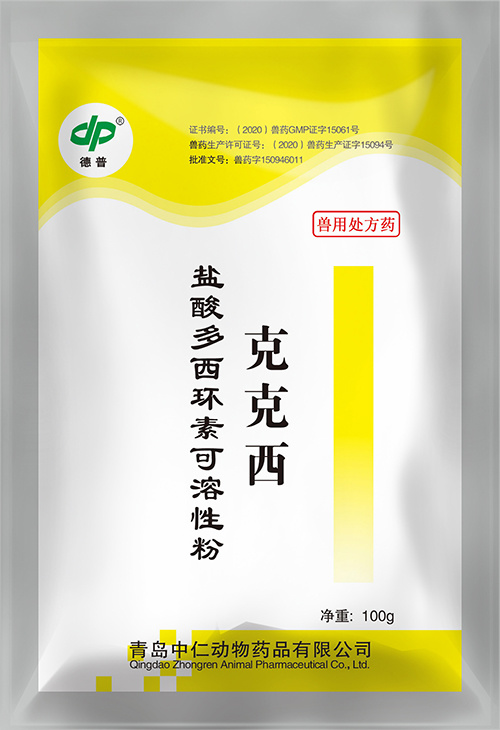
1, spray medication:"Tilmicosin solution”1Bottle+“Kexi”1Bag or"Asthma dysentery”1bottle,20Age1000 One time for broiler, used together3-5Day;
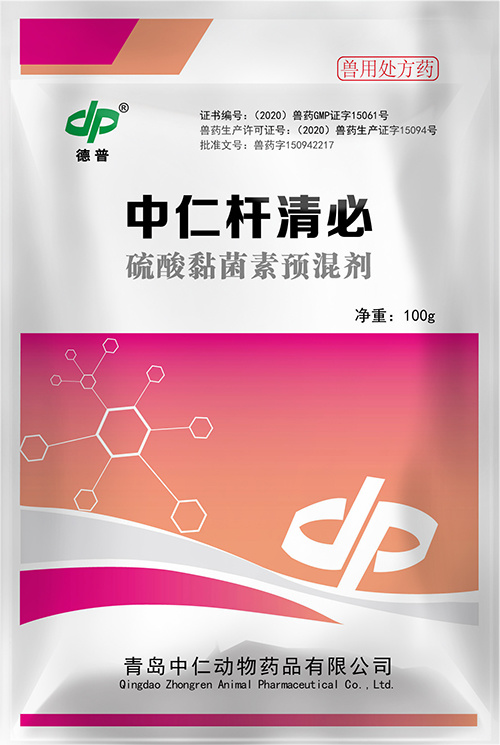
2、 “Maxing Shigan Oral Liquid"or"plague clear”+“Unblocked"or"Zhongren Gan Qingbi”+“Rui Zhiqing"Drinking water, used together3-5day;
3, adjuvant therapy:"cod liver oil"Drinking water, drinking.5Day.
Key words:
Contact Us
Administrative service telephone:0532-85212368
Sales Advisory Phone:0086-532-85212381
E-mail:zhongrenyaoye@126.com
Address: No.6 Road, Jiaoxi Industrial Park, Jiaozhou City, Qingdao, Shandong Province

Qingdao Zhongren Animal Medicine Co., Ltd
Zhongren Aquatic Products