
Prevention and control of common diseases of pigs in spring
2022-04-02
Qingdao Zhongren Animal Medicine Co., Ltd
Zhongren kinetic drug
1. avian influenza
Avian influenza is an infectious disease that has continued to cause greater harm in recent years. This disease occurs throughout the year, and the incidence rate is particularly high in the spring season. Avian influenza is mainly caused by viruses, and general non-pathogenic avian influenza viruses can make chickens produce certain antibodies.
Low pathogenic avian influenza virus can cause some uncomfortable symptoms in chickens, resulting in a decrease in egg production and an increase in mortality. At this time, the antibodies of the chickens themselves will not play much role;
Highly pathogenic avian influenza virus is more harmful, can cause the death of chickens in a short time, and bring great losses to the breeding work.
Chickens affected by different degrees of virus will have different symptoms, but most of them will have head and face edema, blackening of cocks' comb, reduced organ and muscle function, and hemorrhage of digestive tract and respiratory tract.
2. Newcastle disease
Newcastle disease is a common chicken disease. This disease occurs in chickens of all ages. The source of its infection is sick chickens, and the excrement of sick chickens will affect healthy chickens. Newcastle disease will harm the digestive tract and respiratory tract of the chicken body, with the passage of time, leading to a gradual decline in function, until death. The disease has a higher incidence in the spring season.
After the emergence of this disease, it will cause a wide range of spread, making the breeding work more difficult, in which acute Newcastle disease is harmful (direct death), and chronic Newcastle disease is less harmful (functional decline, egg production reduction, etc.), but also need to pay attention to, so as not to affect the benefit.
At present, a good way to deal with Newcastle disease is to immunize chickens to achieve the desired preventive effect. During the vaccination process, the vaccine is dropped into the nasal cavity and eyes of the chicken. This is an effective vaccination method that can fully absorb the vaccine, or add the vaccine to the water and drink water to immunize.
3. respiratory diseases of chickens
In the spring season, frequent climate change, chicken respiratory disease probability will increase. Therefore, in the breeding process, attention should be paid to avoid respiratory diseases in chickens, and reasonable measures should be taken to prevent and treat them.
Disinfection: in the breeding process, should be on the breeding site for regular disinfection, with aldehyde or Sturley, potassium hydrogen sulfate, such as drinking water, feeding trough, tools, such as the use of disinfectant disinfection, reduce the number of bacteria;
Insulation and ventilation: While doing a good job of insulation, do a good job of ventilation, and at the same time reasonably control the number of chickens to avoid excessive density and ensure the safety of breeding work;
Do a good job of vaccination: timely immunization of chickens, improve the safety of breeding, timely removal of chicken excrement, reduce the possibility of the spread of bacteria.
4. broiler ascites syndrome
In the spring season, broilers grow faster. If the ventilation of the farm is not done well, or the density of breeding is too large, it will cause the chicken flock to have ascites syndrome, which will bring greater negative effects.
In order to effectively prevent, should do a good job of ventilation, reduce the number of germs, at the same time to do a good job of heat preservation, to avoid the chicken cold problem;
Secondly, it is necessary to control the growth rate of chickens to avoid their excessive growth, reduce the amount of concentrate and increase roughage appropriately, so as to reduce the probability of ascites syndrome.
In the work of raising chickens in spring, the probability of disease is high. Breeders should strengthen breeding management, do a good job in ventilation and heat preservation, and disease prevention and treatment.
Steely
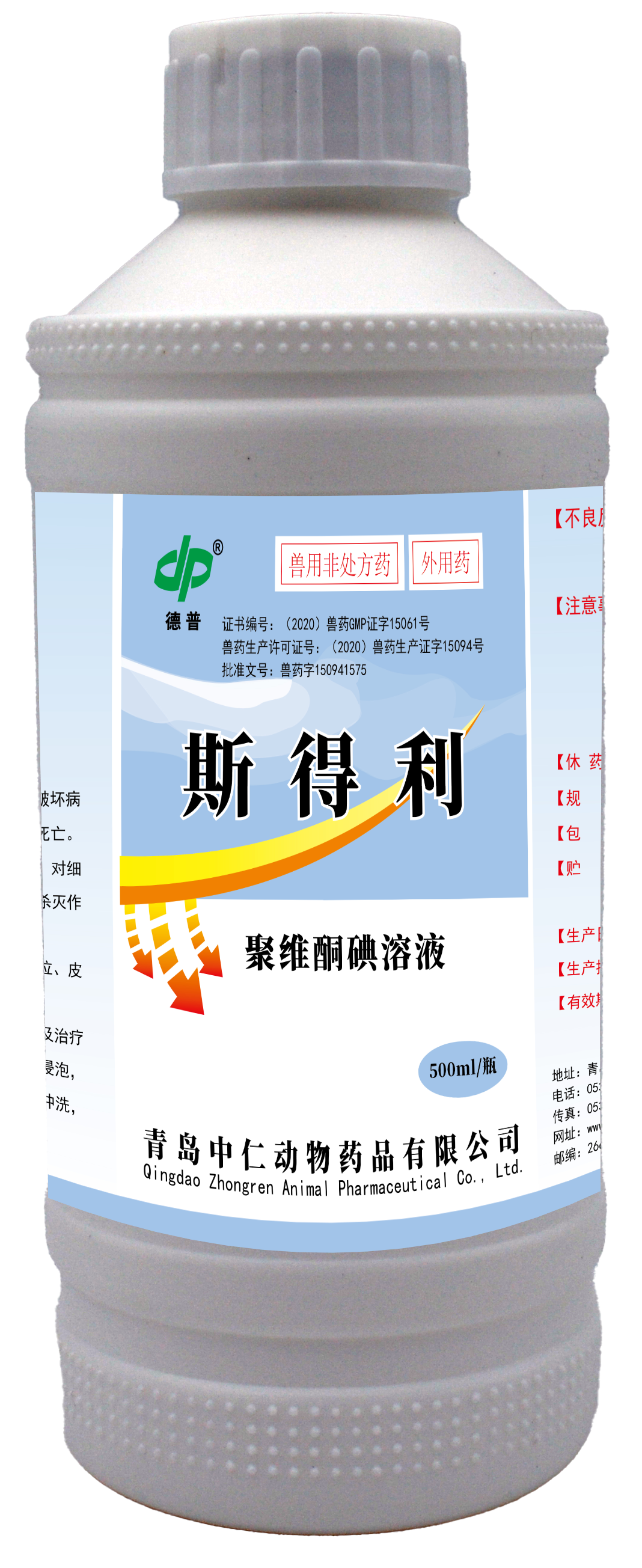
veterinary drug name]
Common Name: Povidone Iodine Solution
commodity name: Staley
main ingredient]Iodine
[Sex shape]]This product is red brown liquid.
【Pharmacological action]]This product through the continuous release of free iodine, destroy the metabolism of pathogenic microorganisms and death. Is a highly efficient and low toxic disinfection drugs, bacteria, viruses and fungi have a good killing effect.
【role and use]]Disinfection antiseptic. For surgical site, skin and mucous membrane disinfection.
Usage and dosage]In terms of povidone iodine. Skin disinfection and treatment of skin diseases, 5% solution; Dairy cow nipple immersion, 0.5 ~ 1% solution; Mucosa and wound flushing, 0.1 solution.
adverse reaction]Adverse reactions have not been seen in the use of the prescribed dosage.
[Note]](1) animal allergy to iodine is prohibited.
(2) When the solution becomes white or light yellow, it loses its disinfection activity.
(3) should not be compatible with mercury containing drugs.
[Hugh Medicine period]]No need to enact.
Aldehyde Kill
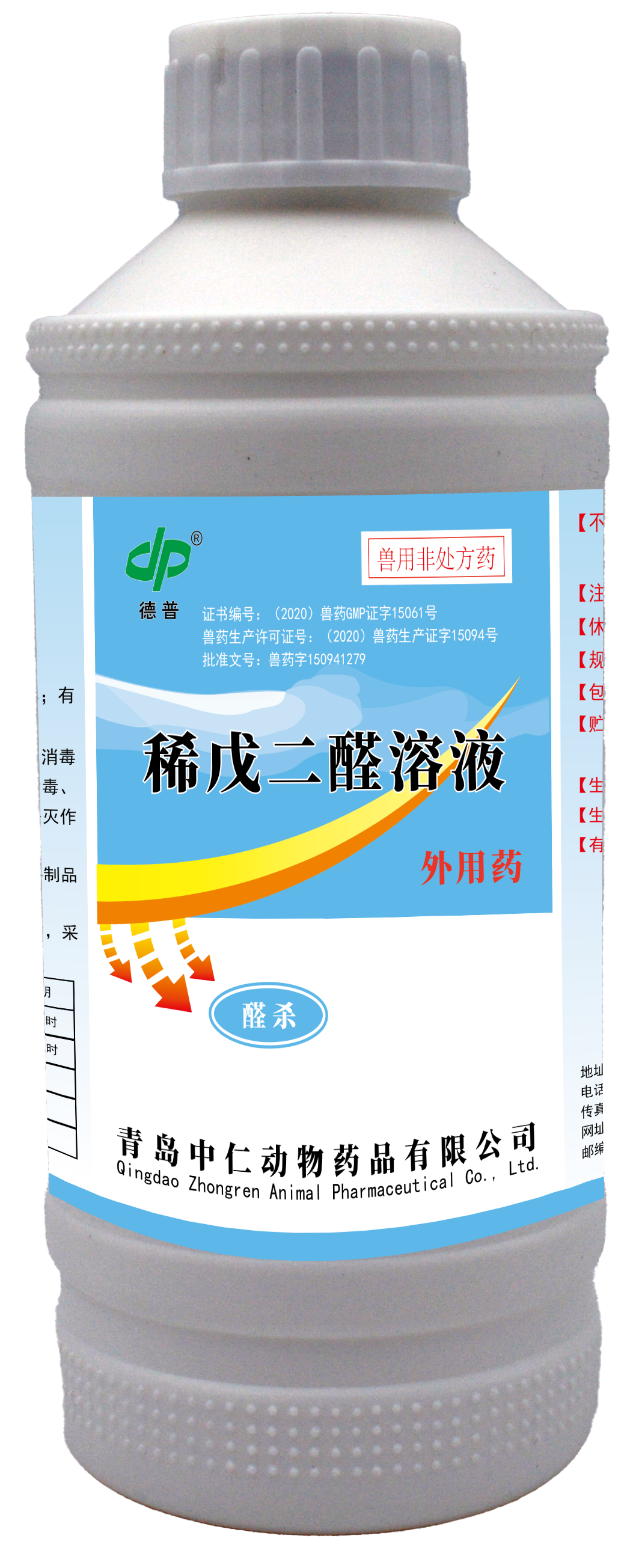
main ingredient]Glutaraldehyde
[Sex shape]]This product is a colorless to slightly yellow clear liquid; a special smell.
【Pharmacological action]]Glutaraldehyde has a broad-spectrum, high-efficiency and quick-acting disinfection effect. It has a good killing effect on bacterial propagules, spores, viruses, Mycobacterium tuberculosis and fungi.
【role and use]]Disinfection antiseptic. Used for rubber, plastic products and surgical instruments disinfection.
Usage and dosage]This product is diluted with water according to the following table, and then used by spraying, soaking and washing method.
adverse reaction]According to the prescribed dose of preparation and use, no adverse reactions have been seen.
Key words:
Previous:
Contact Us
Administrative service telephone:0532-85212368
Sales Advisory Phone:0086-532-85212381
E-mail:zhongrenyaoye@126.com
Address: No.6 Road, Jiaoxi Industrial Park, Jiaozhou City, Qingdao, Shandong Province

Qingdao Zhongren Animal Medicine Co., Ltd
Zhongren Aquatic Products