
How to prevent common diseases in winter chicken farms
2021-12-17
Qingdao Zhongren Animal Medicine Co., Ltd
Zhongren kinetic drug
How to prevent common diseases in winter chicken farms
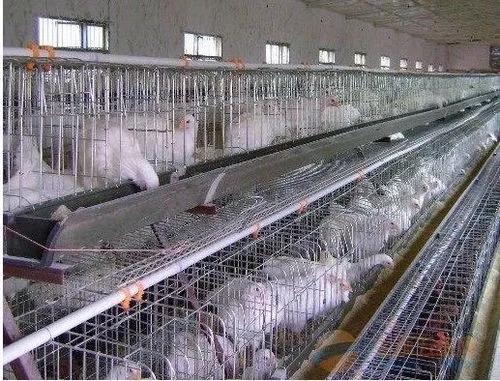
1. watch the three doors.
Watch the three gates: the gate, the gate of the chicken house and the air inlet of the chicken house. Disinfect them regularly and prevent the invasion of thieves. At the same time, control rats and birds to prevent the spread of bird flu and Newcastle disease.
2. understanding of common winter chicken diseases
1. Highly pathogenic avian influenza. Chickens and ducks are more common in poultry. The clinical manifestations are elevated body temperature, swollen head, increased eye secretions, purple and black necrotic spots on the edges of the crown and beard, dyspnea, and a significant decrease in egg production.
In recent years, H9 mutation, increased virulence, H5 clinical symptoms: incubation period of several hours to 3 days, severe respiratory symptoms, head and face swelling, tears, diarrhea, cockscomb hemorrhage and necrosis, foot scale hemorrhage and purple, high mortality rate of chicks, egg production rate of breeders decreased by 20% ~ 80%, egg production rate dropped to a low point in about 5 days, rising slowly. Dissection lesions: tracheal congestion, hemorrhage, glandular gastric papilla and intestinal hemorrhage, serosal hemorrhage, pancreatic hemorrhage, punctate necrosis, egg yolk rupture peritonitis in laying hens.
2. Chronic respiratory disease. The main symptoms are runny nose and sneezing, which gradually develop into coughing and dyspnea, and rales in the trachea. The mortality rate of young chickens aged 4 to 8 weeks was more than 30%.
3, infectious laryngotracheitis. The disease can be infected in all day-old chickens, especially in adult chickens. The clinical features are difficulty in breathing, increased respiratory frequency, coughing up blood secretions or blood clots in severe chickens, conjunctivitis and tears in the eyes, cheese secretions and blood clots often occur in the throat, and in severe cases, the throat is blocked and the chicken suffocates to death.
4. Infectious bronchitis. The disease occurs more frequently in chickens less than 6 weeks old, and the disease is more serious in chicks. After the occurrence of the disease, the sick chicken mouth breathing, coughing, tracheal rales, sneezing, runny nose, chicken lethargy. The symptoms of chickens over 6 months old were not obvious. The egg production of laying hens decreased significantly at the onset of the disease, and produced soft-shelled eggs or deformed eggs or rough eggshells.
5, Newcastle disease. The onset characteristics of typical Newcastle disease: the onset age is advanced to 15-20 days old, even at 5-8 days old, and the mortality rate can reach 10%-30%, which is more common in the offspring produced in the early stage of Newcastle disease in the previous generation of breeders. Newcastle disease two or three free soon after the disease, or inoculation of virulent bursal disease vaccine after the disease. The mortality rate of young breeders aged 8~13 weeks is about 5% ~ 10%. After the start of production, especially during the peak period of egg production, the death rate is not high, and the egg production rate decreases by more than 20%. Newcastle disease is mostly mixed with avian influenza, mycobacterial infection, mycobody disease and colibacillosis.
The characteristics of atypical Newcastle disease: it occurs mostly in autumn, winter and early spring, mainly between the first exemption and the second exemption, or after the second exemption. The brooding period and the breeding period are frequent, and the laying hens are frequent before and after the opening of laying and the peak period of laying eggs. Chickens usually have a history of vaccination. There is no mass at the beginning, showing a slow-onset progressive course of disease, which gradually spreads to the whole group and adjacent chicken houses, and is prone to concurrent or secondary colibacillosis or other diseases.

3. timely prevention and control
1. Eliminate non-infectious predisposing factors and do a good job of heat preservation. Before winter comes to do a good job of chicken house maintenance and heating facilities. During rainy and snowy weather and cold snap, pay attention to heat preservation.
2. Pay attention to ventilation. Mixing sulfur (2kg per 10 square meters) into the litter of the chicken house makes the PH value less than 7.0, which can reduce the generation of ammonia.
3. Reasonable feeding feed. Ingredients should be considered to increase the energy content (can be higher than the standard 5 ~ 10%), in order to improve the chicken's ability to keep out the cold.
4. Establish a strict sanitation and disinfection system. Chicken body disinfection, available Depkin iodine spray disinfection, 2 times a week. Drinking water disinfection, such as potassium hydrogen sulfate, can be used for drinking water disinfection. The implementation of drinking water disinfection, the drug concentration must be accurate. Disinfect the utensils, wash the used feeding utensils such as trays, buckets, buckets and drinking water dispensers with aldehyde killing liquid every day, and dry them for later use. Environmental disinfection, strict spraying disinfection of the chicken house environment, once a week, can be used lime or caustic soda disinfection.
5. Do a good job of vaccination. 3~5 days before and after immunization to stop taking antibiotics, sulfonamides. In the diet appropriate to add oral rehydration salts, gold and other anti-stress agents.
6. Do a good job of drug prevention and control. Winter respiratory disease multiple, should feed some concentrated plus c cod liver oil. Choose drugs reasonably according to the symptoms of chickens.
Product Details


veterinary drug name]
Generic Name: Povidone Iodine Solution
main ingredient]Iodine
character]This product is red brown liquid.
【role and use]]For surgical site, skin and mucous membrane disinfection, environmental disinfection.
Usage and dosage]In terms of povidone iodine. Skin disinfection and treatment of skin diseases: 5% solution; Dairy cow nipple soaking; 0.5 ~ 1% solution; Rinse mucous membrane and wound surface to form 0.1 solution. Environmental disinfection: 1:1000 times diluted spray.
adverse reaction]According to the prescribed dose configuration, no adverse reactions have been seen.
[Note]]1. When the solution becomes white or light yellow, it loses its disinfection activity. 2. Use with caution in animals allergic to iodine. 3. should not be compatible with mercury containing drugs.
veterinary drug name]
Common Name: Potassium Peroxyhydrogen Sulfate Complex Powder
[MainIngredients]]Potassium hydrogen persulfate, sodium chloride
character]This product is a light red granular powder with lemon smell.
【role and use]]Disinfectant. Used for disinfection of livestock and poultry houses, air and drinking water. Prevention and control of aquaculture fish, shrimp bleeding, gill rot, enteritis and other bacterial diseases.
Usage and dosage]With this product. Soaking or spraying:(1) Animal house environment disinfection, drinking water equipment disinfection, air disinfection, terminal disinfection, equipment disinfection, hatchery disinfection, pedal basin disinfection, 1:200 concentration dilution;
(2) drinking water disinfection, 1:1000 concentration dilution;
(3) Disinfection for specific pathogens: Escherichia coli, Staphylococcus aureus, swine vesicular disease virus, infectious bursal disease virus, 1:400 concentration dilution, streptococcus, 1:800 concentration dilution, avian influenza virus, 1:1600 concentration dilution, foot-and-mouth disease virus, 1:1000 concentration dilution.
Disinfection of aquaculture fish and shrimp, dilute 200 times with water and spray evenly in the whole pond every 1m.3Water 0.6~1.2g.
adverse reaction]According to the recommend usage and dosage, no adverse reactions were found.
[Note]]1. Current matching;
2. Not mixed with alkali substances or combined use;
3. The packaging shall not be discarded.
drug withdrawal period]None.
veterinary drug name]
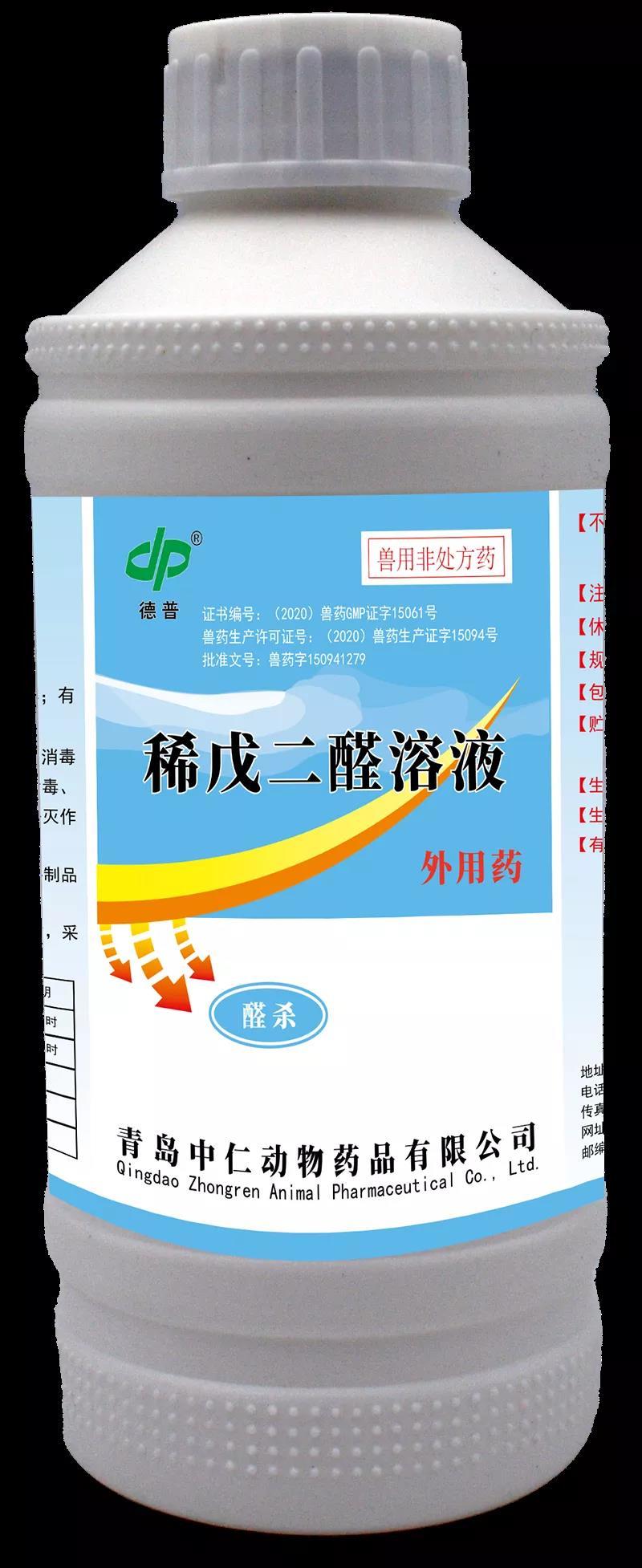
Common Name: Dilute Glutaraldehyde Solution
main ingredient]Glutaraldehyde
[Sex shape]]This product is a colorless to slightly yellow clear liquid; a special smell.
【role and use]]Disinfection antiseptic. Used for rubber, plastic products and surgical instruments disinfection.
Usage and dosage]This product is diluted with water according to the following table, and then used by spraying, soaking and washing method.
adverse reaction]According to the prescribed dose of preparation and use, no adverse reactions have been seen.
[product name]]
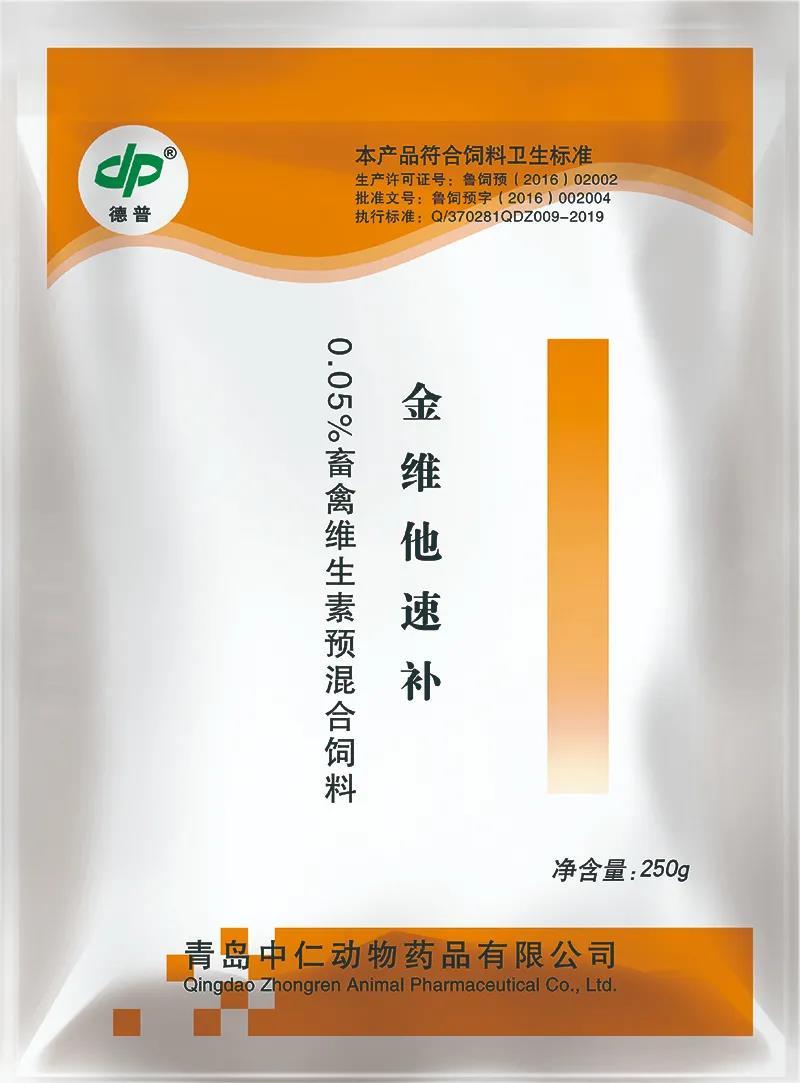
Common name: 0.05% vitamin premixed feed for livestock and poultry
Trade name: Jin Vita Quick Supplement
raw material composition]A variety of vitamins, trace elements, minerals, amino acids, anti-stress factors and other nutrients.
character]This product is light yellow powder.
role and use]It is mainly used for vitamin and trace element deficiency in livestock and poultry. It can relieve various stresses, enhance the body's immune function, improve disease resistance, and promote weight gain, increase egg laying rate, increase egg fertilization rate, and hatching rate.
[scope of application]]
1. Various stresses: weather changes, cold and heat stress, long-distance transportation, chicks entering the house, turning to flock, beak cutting, etc.
2. For a variety of vitamins, mineral deficiency, increase disease resistance, improve production capacity.
3. When the disease of livestock and poultry, can be used as auxiliary treatment, is conducive to the rapid recovery of livestock and poultry.
4. Improve egg production rate, fertilization rate and hatching rate, promote the recovery of the production performance of diseased livestock and poultry, and make the fur of livestock and poultry bright.
method of use]1. Mixed drink: 250g of this product and 1000kg of water; Mixed feeding: 250g of this product and 500kg of mixed material. Use for 3-5 days depending on the situation. Now with, can be reused.
2. Sick livestock and poultry or disease recovery period, the dose is doubled, concentrated application, can accelerate the recovery of the body.
[Note]]This product will be used up as soon as possible after opening, and it will not be used up at one time. Please keep it sealed.
Key words:
Contact Us
Administrative service telephone:0532-85212368
Sales Advisory Phone:0086-532-85212381
E-mail:zhongrenyaoye@126.com
Address: No.6 Road, Jiaoxi Industrial Park, Jiaozhou City, Qingdao, Shandong Province

Qingdao Zhongren Animal Medicine Co., Ltd
Zhongren Aquatic Products